Pre-Roll Machine ROI: How Fast Does It Pay for Itself?
If you’re struggling with rising labor costs and low profit margins while trying to scale your pre-roll production operation, you’re not alone. Many MSOs, dispensaries, copackers, and other cannabis operators are using manual labor workflows that lead to inconsistent output, which makes scaling production and expanding SKUs incredibly difficult.
Operators across the US are feeling the squeeze and are increasingly exploring pre-roll machine ROI to boost volume, without sacrificing quality.
Of course, many small, emerging brands or craft producers assume automation is out of reach. In reality, the right equipment often pays for itself far faster than expected.
In this guide, we’ll break down how ROI works for pre-roll automation and which factors determine how quickly a machine can start returning real value.
How Fast Does a Pre-Roll Machine Pay For Itself?
A pre-roll machine typically pays for itself within 3-12 months, with the exact timeline varying by operation size:
- Small batch = 9-12 months
- Mid-size = 6-9 months
- High volume = 3-6 months
ROI will vary from machine to machine. In certain cases, high-efficiency systems and operations with high demand can achieve ROI in as little as 2 weeks to 6 months.
The key factors that’ll affect your operation’s exact ROI include labor costs, output, waste, market pricing, and equipment costs.
How to Calculate ROI for a Pre-Roll Machine
Return on investment (ROI) is the most important thing you need to consider when evaluating a pre-roll machine purchase as it gives you an idea of your upfront costs versus your long-term savings. This gives you direct insight into how automation impacts overall margins.
The formula to calculate ROI is:
ROI (%) = (Profit increase (savings and profit from topline increase) ÷ Total machine investment) × 100
Automation can improve your profit in two main ways: improving the profit margins on the pre-roll revenue you’re currently making and allowing you to unlock new pre-roll revenue by expanding your production and SKU variety, which enable you to sell to more people and capture new markets effectively.
So you won’t just be saving on labor, but you’ll open up opportunities for revenue that weren’t previously available, such as infused pre-rolls.
In comparison, the payback period focuses on how long it takes for a machine to pay for itself, or how quickly the investment recovers its cost. The formula to calculate that metric is:
Payback Period (years) = Total machine investment ÷ Annual profit increase
For example, a $200,000 investment that generates $200,000 in annual labor savings and unlocks $40,000 in new profit from SKU expansion delivers payback in roughly 10 months.
Key Factors That Impact ROI
The formulas above are a great way to measure your operation’s pre-roll machine ROI, but for them to accurately reflect your situation, you’ll need to understand the factors that influence these numbers and be able to calculate them for your business.
Here’s what you’ll need to consider:
Labor Cost Reduction
Labor is typically the highest cost in most operations, which means the biggest savings come from investing in automation. Beyond that, you’ll gain long-term, predictable labor costs to scale, knowing it takes just one single operator to run one single machine.
For estimation purposes, keep in mind that fully automated equipment can replace 5-20 workers per shift, while semi-automatic equipment with just one operator is equal to 5-10 rollers.
Production Capacity & Speed
Another factor that greatly impacts ROI is the equipment’s production volume and speed, as well as your operation’s ability to keep up with it. Automated machines typically produce thousands per day, or up to 2,000+ joints per hour, when operating optimally.
That’s significantly more than semi-automated throughput, which is typically limited to a few hundred joints per hour, and far beyond manual production, where output often tops out at dozens per hour per operator.
Reduced Product Waste
An often-overlooked factor that affects ROI is reduced product waste, which typically hovers around 5-10% in manual workflows. Instead, pre-roll automation offers a fill accuracy of ±0.01g, ensuring consistent end-products and fewer rejects.
Even more, without overfilling, you’ll better preserve high yields and protect your overall profit margins by doing so.
Total Cost of Ownership
When calculating ROI, it’s not just about the machine’s price, but about the long-term value it’ll deliver. The total cost of owning the machine will also include the freight, installation, training, ongoing maintenance, and service over time.
Accounting for the total cost of ownership means you’ll avoid hidden expenses, reduce downtime risk, and gain a clearer picture of long-term value rather than being misled by a lower upfront price.
Product Consistency & Quality
As automation improves your product’s consistency and quality, you’ll experience a higher passing rate (fewer failures) and fewer returns. In turn, both factors lead to higher overall profits, which directly affect your ROI.
Over time, as your brand aligns with higher quality or a better experience, you’ll also gain stronger brand trust and higher customer retention, leading to steady sales growth.
Market & Pricing Factors
With higher quality in mind, premium pre-rolls also capture a premium price, improving profitability overall. They also have a higher demand, which creates a faster return on investment, since you’ll be making more per joint and producing more than ever before.
ROI Comparison by Major Pre-Roll Machines
While it’s impossible to provide accurate ROI numbers for every machine due to the number of business-specific factors involved, we’ve laid out some key machine specs in the table below to help you benchmark the ROI for your business:
| Machine/Brand | Throughput Range | Operators Needed | Approx. Cost | SKU Capability |
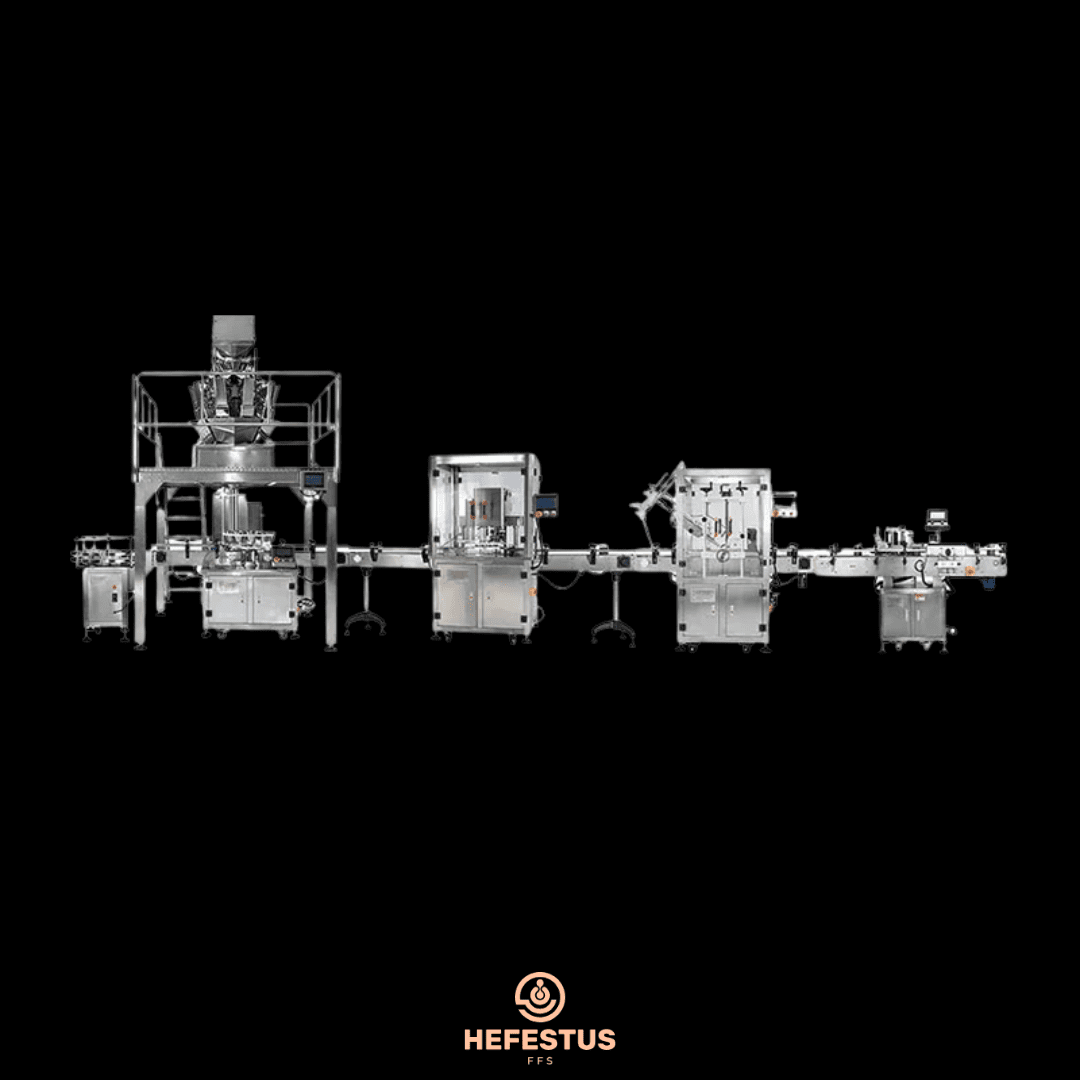
| Hefestus AuraX | 1,500-2,000+/hr | 1 | ~$230k | Cones, blunts, infused, Dutch crown |
| RollPros Blackbird | ~900/hr | 1 | ~$225k | Straight rolls only |
| Accelerant PRO2 | ~1,500/hr | 1 | Pay-per-joint model | Cones + some infused |
| PreRoll-Er 200 | ~1,300/hr | 1 | ~275k | Cones, straight rolls, infused |
| APEHEX | ~1,200/hr | 1 | Unknown | Cones only and limited infused |
| Futurola Knockbox | ~1,000-1,200/hr | 1-2 | $3k-$15k | Cones only |
| King Kone | ~300-600/hr | 1 | ~$2,000 | Cones only |
Total Cost of Ownership Breakdown
Before you go, let’s clarify how to break down total cost of ownership so you can understand the full picture beyond the sticker price. Accounting for ongoing training and maintenance helps protect your ROI long-term.
When investing in automated pre-roll machines, there are both upfront and ongoing costs to consider.
- Upfront costs: The initial or upfront costs that go into owning a machine, is the base equipment price, any optional add-ons or upgrades, freight and insurance, and installation. Upfront costs also include training, whether budgeting for on-site training and SOP development, or ensuring your manufacturer offers it with the base cost.
- Ongoing costs: The ongoing costs of owning automation equipment is where long-term value is either protected or eroded. These costs include routine maintenance, replacement parts, technical support, and consumables like cones, papers, filters, and other wear-and-tear items.
Planning for ongoing costs will keep your production consistent, reduce downtime, and extend the lifespan of your equipment, ensuring automation continues to deliver value for your operation well beyond when you purchase it.
Conclusion: When Pre-Roll Automation Becomes Profitable
Automating your pre roll production becomes profitable when labor efficiency, production volume, and higher quality all align. By reducing manual touchpoints, automation reduces labor costs and high turnover, while producing predictable, consistent output, to meet higher demand.
With a faster time-to-market, and the ability to launch new SKUs, or shift to demand without disrupting production, automation stops being a cost center and becomes a growth engine.
The AuraX, the fully automated pre-roll machine built by Hefestus, isn’t just about increasing speed. It’s about building a more sustainable, scalable operation, designed to grow without sacrificing quality or control.
Contact our team today to learn how the AuraX can help you automate your pre-roll machine production.
Pre-Roll Machine ROI: Frequently Asked Questions
Here are the most common ROI questions operators ask before investing in automation.
Are Pre-Roll Machines Worth the Investment?
Yes, pre-roll machines are worth the investment if your company produces at a consistent volume, faces labor constraints, or struggles with quality or throughput variability.
Over time, by reducing manual labor, improving repeatability, and creating predictable outputs, pre-roll machines stabilize costs, reduce waste, and increase new production capacity, making them a strategic investment for operators focused on scaling rather than just increasing speed.
How Much Does a Pre-Roll Machine Cost?
A pre-roll machine costs anywhere from tens of thousands of dollars to six figures, depending on various factors, such as level of automation, output capacity, and configuration.
To give you an idea, entry-level or semi-automated systems can cost anywhere from $2k-$15k+, while fully automated, enterprise-grade machines typically cost over $200k.
How Many Pre-Rolls Does It Take to Pay Off a Machine?
The number of pre-rolls needed to pay off a machine depends on your labor costs, production volume, and current inefficiencies. Most operators find that replacing multiple hand-rollers with automation typically pays for itself within months rather than years.
What Are the Hidden Costs That Slow Down ROI?
The hidden costs that slow ROI include labor inefficiencies, inconsistent output, downtime, material waste, and rework due to poor process control. Other factors, such as operator training time, maintenance issues, and bottlenecks before or after filling, can also delay payback.