How to Set Up a Pre-Roll Machine (Operator Guide)
When adding automation to your workflows, it’s not just about choosing the right automated pre-roll machine: it’s about setting it up properly so it minimizes downtime and supports smooth production.
Even the best machines can underperform if the setup is rushed or done incorrectly. That means, even after deciding which machine is right for you, you’re not done learning.
Before putting your pre-roll machine to work, read our comprehensive guide. Here, we’ll break down the process of transitioning from manual to semi-automated or automated systems to ensure a smooth transition.
Understand Your Pre-Roll Machine Type
Before we can talk setup, we have to discuss configurations. The steps you follow will differ depending on whether you’re setting up manual, semi-automated, or fully automated systems.
These machine classes determine the setup complexity, the required level of operator involvement, and the repeatability they offer.
For instance, manual machines are simpler to set up, whereas fully automated systems typically require manufacturer intervention or assistance to complete.
The higher the throughput your machine produces, the more important it is to standardize the process rather than rely on manual adjustments – you don’t want to waste time tweaking equipment settings on each run at high volume.
Understanding your machine’s type and output capabilities helps set realistic expectations from the start, enabling you to fine-tune processes to maximize performance.
In high-volume workflows, uptime is crucial to achieving target throughput and ROI, which begins with having your machine properly configured.
Step 1: Preparing Your Materials Before Setup
Regardless of the machine, material preparation is a crucial factor in how consistently your equipment can fill and pack pre-rolls. That means the first step in any process is to carefully prepare your materials before setup.
Inconsistent preparation, such as grind size, can cause jamming during production, leading to downtime. In addition, inconsistent materials create density variations that can lead to airflow issues for consumers.
For many facilities, automation setup problems aren’t due to the machine or its settings but rather to the material. That’s why it pays to do your due diligence on material prep from the start.
Be sure your preparation of materials, such as flower and paper or cones, aligns with the intended pre-roll format and production volume. This means standardizing processes across SKUs, including infused materials, blunts, straight rolls, and beyond.
In this step, you’ll:
- Determine the size, type (straight, cone, etc), and infusion
- Make sure you have the right papers and the material ready to produce these pre-rolls with your machine
Although it may seem obvious, double-checking your paper type is critical to avoid spending hours producing potentially thousands of pre-rolls that you don’t want.
Keep in mind, it’s just as important to design your material prep processes to deliver consistent results as it is for your equipment to fill consistently, too.
Advanced equipment, like the AuraX, helps provide peace of mind for this step, as it’s designed to handle any type of material, infused or not, and any size or shape of paper. This becomes even more important when producing multiple SKUs and switching materials often.
Step 2: Machine Installation and Physical Setup
The next step is to ensure the proper physical setup for your machine installation. The stability and physical placement of your machine will influence its overall performance.
In tight spaces, you might not be able to access key equipment components easily, and if the ground isn’t level, mechanisms could become misaligned. It helps to have a roomier room so employees can move around the machine when needed.
It’s also wise to ensure you have space to set up the complementary equipment you’ll need for other parts of the process. For instance, grinding equipment, or tables for packaging totes, etc.
To be sure you have ample space, before purchasing, find the equipment’s dimensions on the manufacturer’s product page, get out your measuring tape to outline the machine’s location, and check the space from there.
Even more than the physical standing of the machine, you’ll also have to consider the environmental conditions surrounding it. If the room is too humid or too dry, or exhibits other extremes, you may see negative effects on operational consistency.
All in all, incorrect installation can present persistent issues to your workflows.
And what might not seem like a big deal at small volumes only compounds as you increase production volume. That’s why it’s essential to catch early setup errors, which only become more difficult to correct later in production.
If you’re still in the shopping phase of equipment purchases, take the time now to verify the equipment’s size and footprint to ensure you have sufficient workable space, and check the environmental conditions to fine-tune the optimal operating space.
Or, if you’d rather not worry about the logistics and spacing of installing the equipment, seek out manufacturers like Hefestus, who provide on-site installation and training. This ensures your installation is done properly, gets you up and running faster, and minimizes downtime overall.
Step 3: Calibration and Initial Dial-In
On the more technical side, the next step involves equipment calibration and initial dial-in. At its core, calibration aligns the machine’s output with the operator-specified target weight, density, and airflow.
Be mindful that not all machines will require calibration and dialing in as often as others. For instance, the AuraX is designed to produce high-quality pre-rolls with minimal variation within or between batches.
With other equipment, dialing in is an iterative process, not a one-time adjustment. As you set up and test your SKUs, you’ll dial in their mechanisms and processes to better align with your desired outcomes.
The most important factor to keep in mind here is setting aside time to ensure the equipment is calibrated and dialed in before production. These early production runs will function more as controlled tests than finished outputs.
An example process would include:
1. Prep material
2. Set up the machine, whose exact steps will vary by manufacturer
3. Do a trial run of 5-10 pre-rolls and test them out.
- Check for consistency and finish, and have someone smoke one to confirm whether canoeing or airflow issues are present.
Again, what might seem small in the early stages will only compound and become more impactful as volume increases. It’s best to fine-tune the processes for each SKU initially to maximize uptime and maintain consistency.
From there, building these configurations into your SOPs will support structured adjustment processes that reduce variability and rework. Ultimately, the time you spend on this step will save you from unnecessary downtime in the long run.
Step 4: Integrating the Machine Into Your Production Workflow
After properly setting up the equipment, preparing the material to its ideal specifications, and calibrating and dialing in processes, it’s time to fully integrate the machine into your production workflow.
Because the machine setup affects both upstream preparation and downstream packaging, it’s wise to invest time and effort in integrating the equipment seamlessly without creating friction in current workflows or processes.
Again, here the steps will vary for each machine.
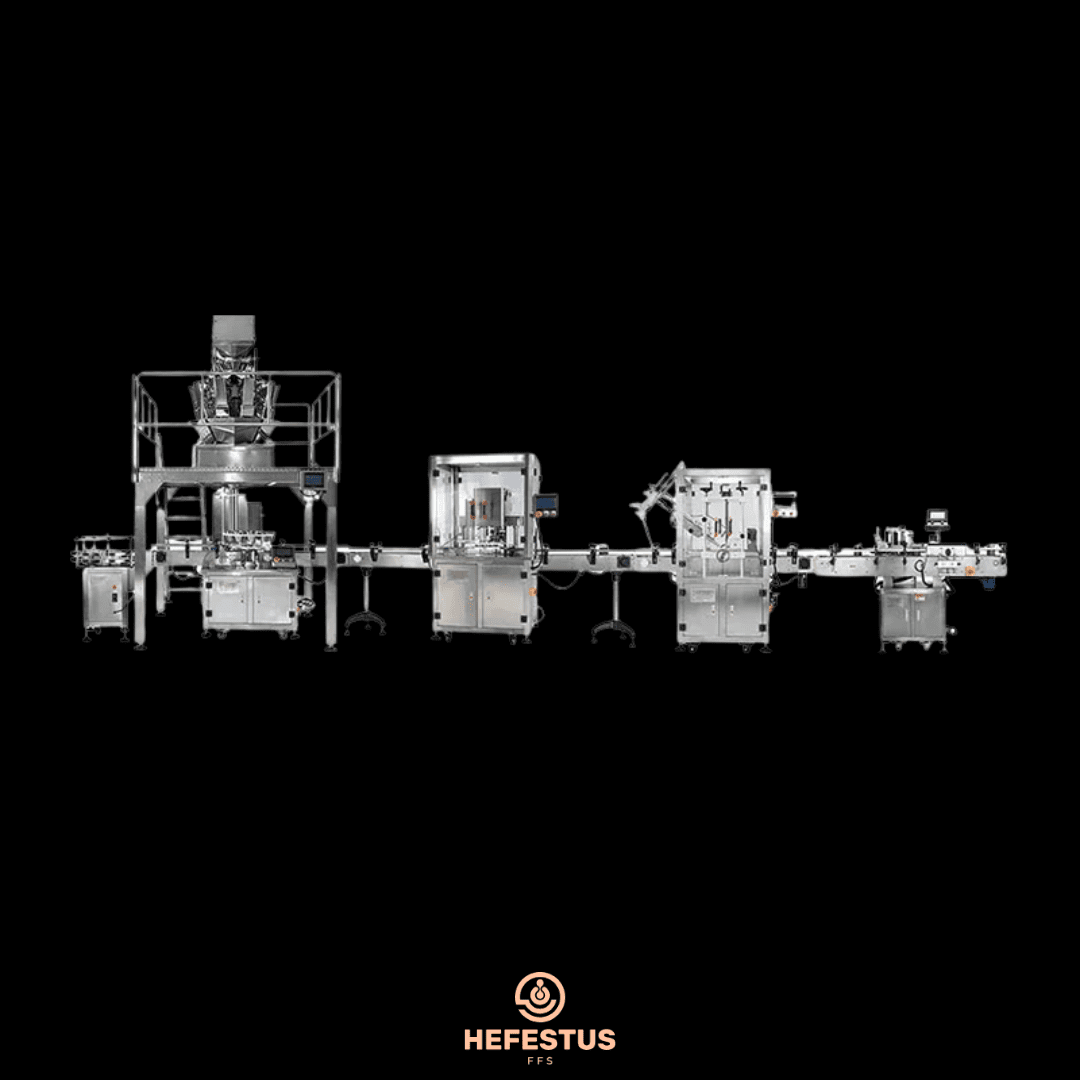
Many machines are modular, like the AuraX, which can integrate filling, infusing, finishing, weighing, and packaging into a single workflow, with add-ons such as the Weight Checker, Infusion Needle, TerpPreserve Grinder, tube labeler, and AutoTube.
This will simplify the flow of the entire process, and assigning labor to each step, but not every machine will streamline from start to finish as seamlessly.
For most machines, depending on your production management approach, setup decisions will influence how you allocate labor and throughput for finishing. Questions you’ll need to consider in this step are:
Will you prep all in one shift and fill in another? Will you have all three processes running simultaneously? What will labor look like for the workflow chosen?
And beyond. Don’t overlook the importance of this forward-thinking and strategic planning. A machine in isolation can perform well but fail within a workflow.
It’s all about assimilating the machine into your production workflows, so its theoretical capacity aligns with real-world output.
Step 5: SOPs, Training, and Repeatability
While it’s important to take your time setting up your automation equipment, it’s equally important to document the setup so you can repeat it across shifts and operators. Its repeatability will be key for long-term sustainability and scale.
Having one employee know the setup information simply isn’t feasible. Undocumented setup knowledge will create inconsistencies as teams grow and even across shifts.
That’s when SOPs (standard operating procedures) and their training come into the setup workflow. Building SOPs at the initial setup will protect quality and efficiency as production scales.
From there, consistent SOP training for new staff will ensure the repeatability of the processes initially outlined during setup. It’s also important to have a process in place for updating SOPs and distributing and training on revisions.
As volume increases, parts of the workflow may change; these changes must be documented to ensure the processes can be implemented across shifts and teams.
For high-quality results and customer loyalty, consistent performance becomes more valuable than peak speed over time. Ultimately, SOPs and their training will ensure this consistency.
This is where high-quality equipment also provides an edge. At Hefestus, we’re proud to offer robust training with AuraX, including the creation of SOPs for individual SKUs during the included 5 days of setup and training.
Common Setup Mistakes Operators Make
In any industry, it’s wise to learn from other operators’ mistakes. For the pre-roll machine setup, there are a few common practices that you can learn from others who have already implemented some type of automation:
- Rushing calibration to meet production deadlines: To meet retailer demand, many operators rush the calibration process to increase machine output, often at the expense of accuracy. This can hurt overall margins due to inconsistencies and quality issues.
- Treating setup as a one-time task: Operators who fail to scale treat setup as a one-time task. Over time, processes must be iterated to real-time production workflows and scenarios, with any adjustments recorded for application across shifts and teams.
- Adjusting multiple variables simultaneously: Speaking of adjustments, when you adjust multiple variables at once, it’s nearly impossible to determine which was causing what issue. When dialing in the setup, be sure to tweak just one variable at a time to see how it affects the end results until you achieve perfection.
- Ignoring workflow fit and downstream impact: Another common mistake operators make is rushing through the initial integration of the equipment into workflows. Without the right fit, production quality and even volume can suffer due to negative downstream impacts.
- Relying on informal knowledge instead of documentation: It’s great if your team knows how to run the machine just right, but that knowledge must be documented so every employee can reproduce the same conditions for the same results. Tightening SOP protocols is crucial to recording this type of know-how.
How Automation Changes the Setup Process at Scale
As volume increases, manual processes and setup become harder to control. From operator to operator, shift to shift, it’s nearly impossible to control every individual variable that affects production.
Automation, however, reduces this operator-dependent variability. It removes human error from the workflow and refines each step to ensure repeatable accuracy across runs and shifts.
Of course, not all pre-roll machines and systems can be treated equally. The best-engineered systems will require less time to dial in and improve repeatability with fewer tweaks than other machines.
The AuraX, designed by Hefestus with over 30 years of automation experience, is a setup built for scale, not manual correction. It’s specifically engineered to handle a wide range of paper and material types with minimal changeover, minimizing downtime and ensuring repeatable results.
Conclusion: Getting Set Up Right From Day One
As you’ve learned here, the way you set up your pre-roll machine will shape everything that follows. A proper setup will uphold your quality standards, protect your margins, and deliver consistent results.
When the workflow, equipment, and output expectations align, production feels controlled instead of chaotic.
The right approach always depends on where you are headed. A startup building toward steady monthly volume needs a different foundation than a multi-state operator standardizing across markets. Your setup should reflect that destination.
Scaling successfully requires planning, setup, and production to move together. If you’re exploring automation for your operation, start by reaching out to Hefestus to learn more about the AuraX.
How to Set Up a Pre-Roll Machine: Frequently Asked Questions
Finally, let’s answer the most frequently asked questions from operators like yourself.
Is setting up a pre-roll machine difficult?
Setting up a pre-roll machine can be difficult, depending on the level of automation and the equipment’s complexity. Manual and semi-automated machines are typically easier to set up, while fully automated systems require more planning, calibration, and workflow alignment.
How long does it take to set up a pre-roll machine?
How long it takes to set up a pre-roll machine depends on machine type, material readiness, and how much time is dedicated to calibration and dial-in. Initial setup can range from a few hours for simpler systems to several days for automated equipment when accounting for testing, SKU-specific calibration, and SOP development.
When should operators reconsider their setup process?
Operators should reconsider their setup process when they experience recurring downtime, inconsistent weights or airflow, rising rework, or difficulty scaling across shifts. Changes in volume, new SKUs, infused products, or staffing are also indicators that setup assumptions may no longer align with real-world production.
How often should a pre-roll machine be recalibrated?
How often a pre-roll machine should be recalibrated depends on material variability, SKU changes, and production volume. Machines should be checked whenever materials change, new SKUs are introduced, or performance drifts from target specifications.