New Jersey Cannabis Regulations
New Jersey’s cannabis industry has undergone one of the most significant legal transformations in the state’s history. Since adult-use sales launched in April 2022, the Garden State has built a comprehensive regulatory framework governing everything from seed to sale. Whether you’re a business owner navigating the licensing process, a consumer understanding your rights, or a researcher tracking market trends, this guide breaks down everything you need to know about New Jersey cannabis law in 2026.
The New Jersey Cannabis Regulatory Commission (CRC) sits at the center of it all — overseeing licensing, enforcement, taxation, and consumer protection across both the medical and recreational markets.
Key New Jersey Cannabis Regulations at a Glance
| Regulation | Rule |
| Legal age | 21+ |
| Possession limit | 6 ounces |
| Purchase limit per transaction | 1 ounce |
| Home cultivation | Illegal |
| Adult-use sales start | April 2022 |
| State sales tax | 6.625% |
| Local municipal tax | Up to 2% |
| Hashish possession limit | 17 grams |
Quick regulatory snapshot:
- The CRC issues six classes of cannabis business licenses
- Dispensaries cannot sell food, alcohol, tobacco, or beverages
- Cannabis odors must be contained within dispensary premises
- Medical cannabis is fully tax-exempt; recreational is not
- Municipalities control local zoning and can add their own tax
New Jersey Cannabis Legalization Timeline
| Year | Event |
| 2010 | New Jersey Compassionate Use Medical Marijuana Act signed |
| 2019 | Jake Honig Compassionate Use Medical Cannabis Act expands medical program |
| 2020 | Voters approve legalization referendum by roughly 67% |
| 2021 | CREAMM Act enacted; CRC established; possession decriminalized from January 1 |
| 2022 | First adult-use sales begin April 21 |
| 2023 | Personal-Use Cannabis Rules updated March 6; consumption lounge rules adopted |
| 2025 | Packaging and labeling guide updated; edibles rules expanded |
The legalization push gained momentum under Governor Phil Murphy, who made adult-use cannabis a key policy priority. The CREAMM Act (Cannabis Regulatory, Enforcement Assistance, and Marketplace Modernization Act) didn’t just flip a legal switch — it created an entirely new regulatory agency and a structured licensing ecosystem designed to bring equity and accountability to the market simultaneously.
Current Legal Status of Cannabis in New Jersey
Recreational cannabis is fully legal in New Jersey for adults 21 and older. The medical program, governed by the Jake Honig Compassionate Use Medical Cannabis Act, runs in parallel and offers expanded access — including higher monthly purchase limits — for registered patients with qualifying conditions.
One nuance worth understanding: New Jersey law draws a deliberate legal distinction between “cannabis” and “marijuana.” Cannabis refers specifically to the regulated product grown, manufactured, and sold by CRC-licensed businesses. Marijuana refers to the same plant operating outside that regulatory framework — essentially the illicit market. The distinction matters legally, because penalties and protections apply differently depending on which side of that line a product falls on.
On the federal level, cannabis remains a Schedule I controlled substance under the Controlled Substances Act. However, New Jersey law directs state law enforcement not to cooperate with federal agencies enforcing cannabis prohibition for activities that are lawful under state law. Federal prosecution priorities focus on distribution to minors, cartel involvement, interstate trafficking, and use on federal property — not state-legal adult use.
Cannabis Possession and Purchase Limits in New Jersey
| Category | Limit |
| Personal possession (21+) | 6 ounces |
| Purchase per transaction | 1 ounce of flower |
| Concentrates per transaction | 4 grams |
| Edible THC per transaction | 1,000 mg |
| Hashish possession | 17 grams |
| Medical patient monthly limit | 3 ounces |
| Gifting limit | 1 ounce (no compensation) |
Exceeding the 6-ounce possession limit turns a legal activity into a fourth-degree crime, punishable by up to 18 months in prison and a $25,000 fine. Distribution — even informal gifting above 1 ounce, or any exchange involving compensation — can escalate to felony-level charges depending on quantity.
Consumption is restricted to:
- Private residences (subject to landlord rules)
- Licensed dispensary consumption lounges
- Any venue where cigarette smoking is permitted, unless otherwise posted
Public use — parks, beaches, boardwalks, sidewalks, vehicles — remains prohibited and can result in civil penalties or disorderly persons charges. Driving under the influence of cannabis is prosecuted the same as drunk driving. Cannabis in a vehicle must be sealed and stored out of reach; an open container or accessible stash in the console or glove box is a civil violation even if the driver is sober.
Notably, the smell of cannabis alone no longer gives police probable cause to search a vehicle or person.
New Jersey Cannabis Licensing Structure
The CRC issues six classes of cannabis business licenses:
| License Class | Type | Description |
| Class 1 | Cultivator | Commercial cannabis growing operations |
| Class 2 | Manufacturer | Processing, extraction, infused product creation |
| Class 3 | Wholesaler | Bulk cannabis product distribution between licensees |
| Class 4 | Distributor | Supply chain transport and logistics |
| Class 5 | Retailer | Consumer-facing dispensaries; eligible for consumption lounge endorsement |
| Class 6 | Delivery | Direct-to-consumer cannabis delivery |
Two pathways to full licensure:
Conditional licenses serve as a provisional starting point. Valid for 120 days (extendable by 45), they give applicants time to secure a location, obtain municipal approval, and build out their operation — without yet being permitted to buy, sell, or possess cannabis commercially. Conditional licenses cannot be renewed; they must convert to annual licenses.
Annual licenses are the fully operational license tier. They require extensive documentation: operating plans, safety and security protocols, environmental impact statements, workforce development plans, labor peace agreements with recognized labor organizations, and detailed standard operating procedures covering everything from inventory tracking to waste disposal.
Microbusinesses represent a third, scaled-down option — capped at 10 employees, 2,500 square feet, and 1,000 pounds of cannabis sold per month. At least 51% of all owners, principals, and employees must be local residents. Fees are reduced by 50%, and labor peace agreements are not required.
Cannabis Manufacturing Regulations in New Jersey
Cannabis manufacturers operating under a Class 2 license must comply with detailed CRC rules covering:
- Product formulation: Edibles must be shelf-stable, non-perishable, and contain only FDA-generally-recognized-as-safe (GRAS) ingredients. No products requiring refrigeration, cooking, or sterile storage environments are permitted.
- Packaging and labeling: All products must be properly tested, packaged, sealed, and labeled before reaching retailers. The CRC updated its Packaging and Labeling Guide as recently as February 2025.
- Quality control: Every product must pass laboratory testing before sale. Retailers are required to offer consumers the lab testing report on request.
- Inventory tracking: Manufacturers must maintain rigorous inventory control systems with diversion prevention protocols built in.
- Waste disposal: Documented waste disposal and sanitation procedures are mandatory.
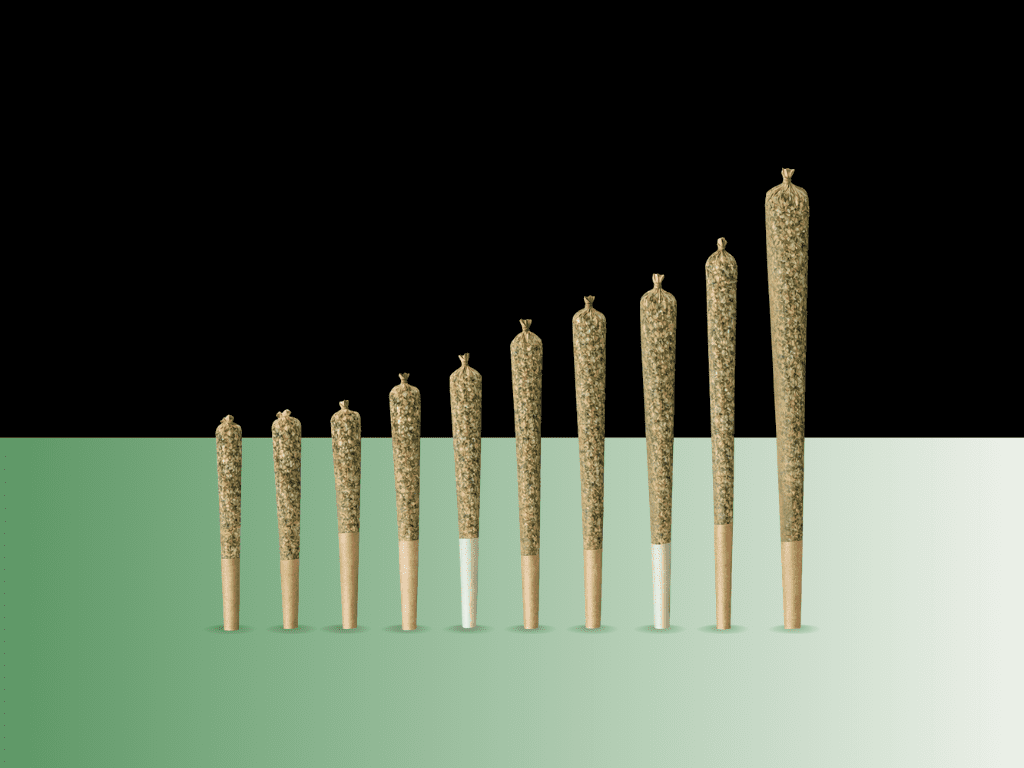
For cannabis businesses evaluating their product mix under these rules, understanding whether infused pre-rolls fit their operational model is a common early decision point.. These regulations directly influence the equipment, automation, and processing standards that cannabis manufacturers adopt — and as the edibles rules expand, so does the product innovation landscape.
Cannabis Taxation in New Jersey
| Tax Type | Rate |
| State sales tax | 6.625% |
| Social Equity Excise Fee (SEEF) | 1/3 of 1% of avg. retail cost per oz |
| Local municipal tax | Up to 2% (optional, set by municipality) |
| Medical cannabis tax | 0% |
The Social Equity Excise Fee is charged at the cultivator level and flows into the CREAMM Fund, which the legislature appropriates for social equity investments. These include assistance for individuals with past marijuana convictions, affordable housing, mental health services, educational support, and workforce development programs. The CRC holds public input sessions — broken down by region — before making annual funding recommendations to the Governor and Legislature.
Medical cannabis remains fully tax-exempt, making the patient registration process financially meaningful for qualifying individuals who use cannabis regularly.
New Jersey Cannabis Dispensary and License Growth
New Jersey’s licensed cannabis market has expanded steadily since the April 2022 adult-use launch. The CRC maintains a publicly searchable database of all permitted and licensed cannabis businesses at nj.gov/cannabis. Dispensaries are geographically distributed across the state, though density varies by municipality — since local governments control zoning and can restrict the number and type of cannabis businesses within their borders.
Municipalities can also opt in to the 2% local cannabis tax, creating variation in consumer pricing across different parts of the state. Some municipalities have opted out of allowing cannabis businesses entirely, while others have become regional retail hubs.
The CRC cannot issue a license that would violate a local ordinance, making municipal research an essential first step for any prospective licensee.
Production and Manufacturing Trends in the NJ Cannabis Industry
As New Jersey’s regulatory framework matures, manufacturing is evolving in step. Key growth areas include:
- Infused products and edibles: The 2023–2025 rule expansions broadened the permitted edible categories significantly, opening new product lines for manufacturers.
- Concentrates and vape formulations: Demand for non-flower formats continues to grow, driving investment in extraction equipment and processing facilities.
- Pre-roll production: Automated pre-roll manufacturing has become a major operational focus as volume scales up.
- Automation and compliance tech: Inventory tracking, seed-to-sale software, and point-of-sale systems compliant with CRC requirements are now standard infrastructure for licensed operators.
Regulation shapes production at every level — from what ingredients are permitted in an edible to how a vape cartridge must be labeled and what safety disclosures must accompany it at point of sale.
Future Outlook for New Jersey Cannabis Regulations
Several developments are worth watching as NJ cannabis law continues to evolve:
- Social equity licensing expansion: The CRC continues to prioritize conditional and microbusiness licenses for impact zone businesses, minority-owned businesses, and social equity applicants.
- Consumption lounge growth: The 2023 consumption area rules opened a new retail format; expect more dispensaries to pursue lounge endorsements as the market matures.
- Edibles expansion: The proposed 2023 edibles rules, if fully adopted, will meaningfully expand the product variety available to consumers.
- Federal rescheduling: Any federal movement on cannabis rescheduling would have downstream effects on NJ banking access, taxation, and interstate commerce rules — all areas currently constrained by federal prohibition.
- SEEF allocation: As SEEF revenue grows, the legislative debate over how those funds are allocated will intensify, with significant implications for communities most impacted by past enforcement.

Sources and Data Methodology
This guide draws from the following primary and authoritative sources:
- New Jersey Cannabis Regulatory Commission (nj.gov/cannabis) — official rules, regulations, licensing guidance, and consumer FAQs
- N.J. Admin. Code § 17:30-14.3 — retailer sale regulations (via Cornell Law / LII)
- CREAMM Act and Jake Honig Compassionate Use Medical Cannabis Act — governing legislation
- N.J.S.A. 2C:35-10 — possession and criminal penalty statutes
- Brach Eichler LLC Cannabis FAQ (2025) — practitioner-level legal analysis
- Attorneys Hartman, Chartered — criminal defense context for possession and enforcement
All regulatory figures reflect rules in effect as of early 2026. Cannabis law in New Jersey continues to develop; readers are encouraged to verify current rules directly with the CRC or a qualified New Jersey cannabis attorney.
Key Takeaways
- Adult-use cannabis is legal in NJ for anyone 21+, with a 6 oz possession limit and 1 oz per-transaction purchase cap
- The CRC oversees all licensing across six license classes, from cultivators to delivery services
- Conditional licenses offer a 120-day pathway to full annual licensure
- Taxes stack: 6.625% state sales tax + SEEF + up to 2% local municipal tax
- Medical cannabis remains tax-exempt with higher monthly purchase limits (3 oz)
- Home cultivation is illegal; the smell of cannabis no longer justifies a police search
- Employers cannot penalize off-duty cannabis use, but can drug test under specific conditions