How to Open a Pre Roll Tube
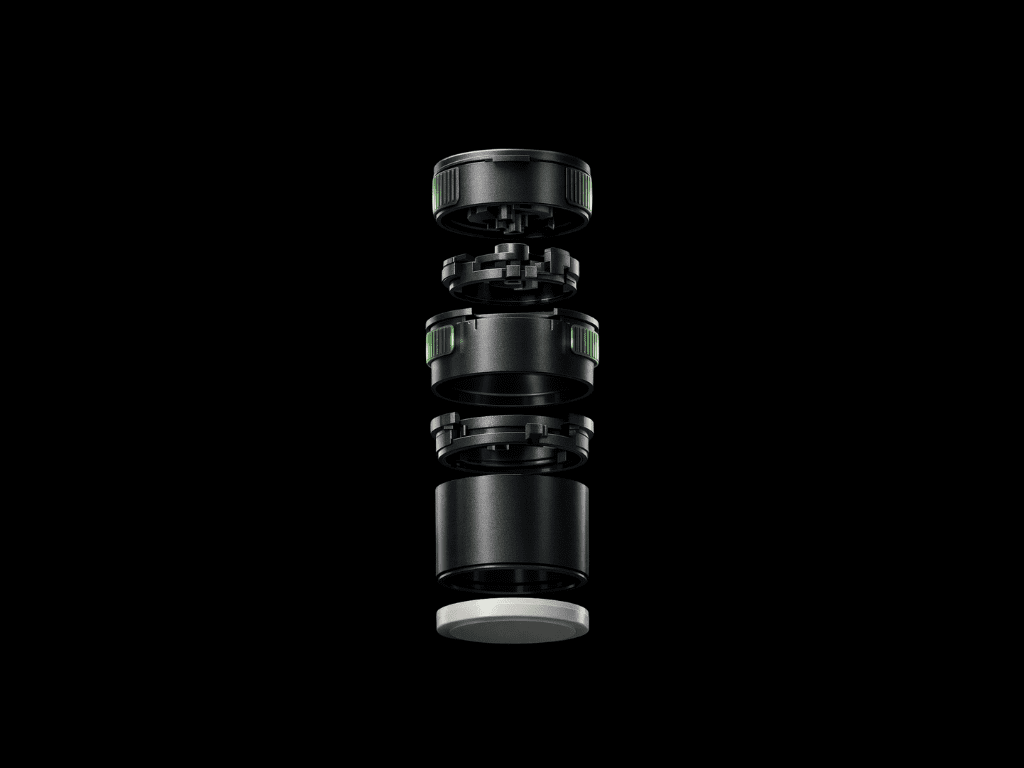
Pre roll tubes are designed to protect cannabis joints from damage, odor, and moisture — and they do their job almost too well. Because most modern pre roll containers are legally required to be child-resistant, first-time users often find themselves staring at a tube that simply refuses to cooperate.
The good news? Every pre roll tube opens using one of just a handful of mechanisms. Once you know which one you’re dealing with, you can open any joint container in seconds — no force, no frustration, no broken nails.
This guide walks you through every common pre roll tube type, how to open each one correctly, and what to do when a stubborn container just won’t budge.
Quick Answer: How to Open a Pre Roll Tube
Most pre roll tubes open using one of these methods:
- Squeeze the sides near the lid until it pops open (pop-top tubes)
- Push down and twist counterclockwise (push-and-turn child-resistant caps)
- Unscrew the lid like a standard bottle cap (screw-top glass tubes)
- Wiggle and pull the cork upward (cork-top glass tubes)
- Align, press, and slide the lid in the indicated direction (slide-lock or clip-lock designs)
Identify the mechanism first — the right technique makes the difference between a two-second open and a two-minute battle.
Why Pre Roll Tubes Are Hard to Open
If you’ve ever felt like a pre roll container was designed specifically to frustrate adults, you’re not entirely wrong — it was designed to frustrate children, and adults sometimes get caught in the crossfire.
Cannabis packaging laws require child resistance. Under ASTM D-3475 standards — the benchmark used across the cannabis industry — a package must be tested with 100 children under age 5. To pass, 85% must be unable to open it without a demonstration, and 80% must fail even with a demonstration. That’s a high bar, and it’s why these mechanisms feel genuinely tough.
But there’s an often-overlooked flip side to that standard: at least 90 out of 100 adults between ages 50 and 70 must also be able to open the package successfully. Tubes that pass child-resistance tests but fail adult usability aren’t actually compliant — they’re just poorly designed.
Beyond child safety, there are three other reasons pre roll tubes are engineered the way they are:
- Freshness protection. THC degrades when exposed to oxygen. Research has shown that CBN-to-THC ratios increase measurably over time when cannabis is improperly sealed — 2.5% after one year, 6.7% after two, and 14.2% after four years, according to a 1999 United Nations study. An airtight seal directly affects potency.
- Odor control. The terpenes that give cannabis its aroma are the same ones that attract unwanted attention. A well-sealed tube keeps smells contained, giving users discretion in public or shared spaces.
- Tamper evidence. Many states legally require cannabis packaging to show visible signs if it’s been opened or interfered with. Mechanisms like shrink bands, paper seals, and snap-lock tops all serve this purpose.
Common Pre Roll Tube Types and How to Open Them
Pop-Top Pre Roll Tubes (Most Common)
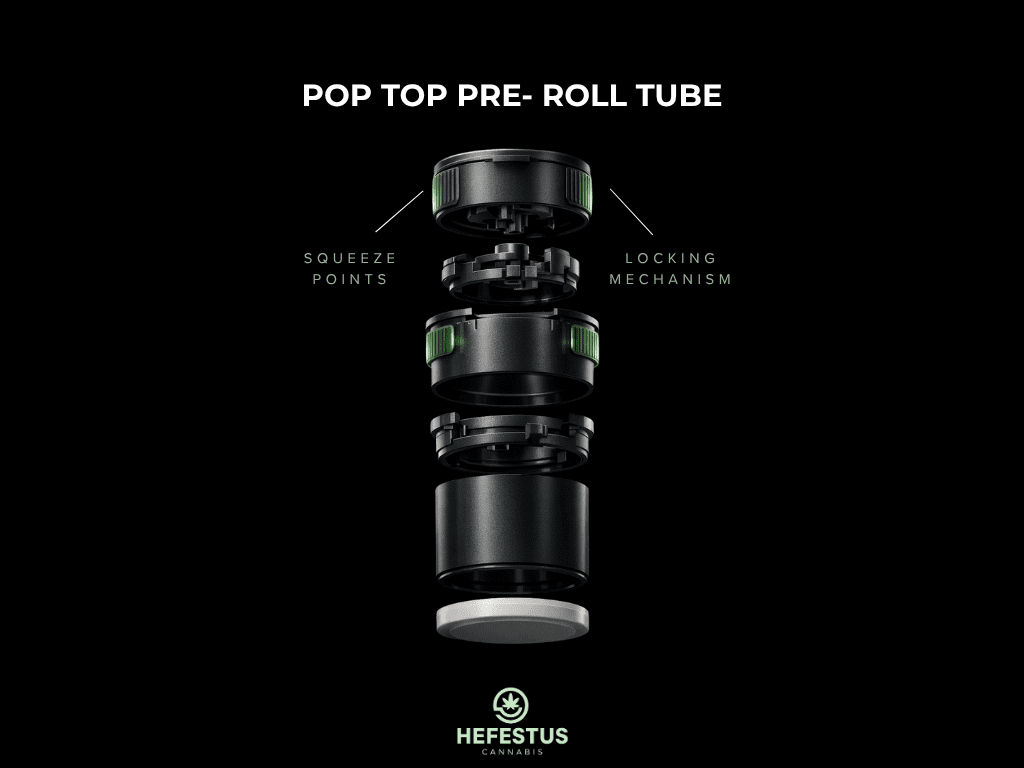
The pop-top is the most popular pre roll container in the cannabis industry — inexpensive, familiar, available in dozens of colors and sizes, and certified child-resistant under ASTM standards. You’ll find these at virtually every dispensary.
How to identify it: A slim plastic cylinder with a flat lid and no visible hinge, threads, or cork. The lid looks like it’s fused to the tube.
How to open it:
- Hold the tube upright in one hand, gripping the body — not the lid.
- Locate the two flat spots or slight indentations on opposite sides of the tube, just below the cap line. These are the squeeze points.
- Place your thumb on one side and index finger on the other, directly over those spots.
- Squeeze the tube body firmly — not the cap itself.
- While squeezing, the lid will pop upward.
Common mistake: Squeezing the cap instead of the tube body. The locking mechanism lives in the rim of the tube, not the lid. Squeezing higher up just flexes the cap and does nothing.
Pro tip: If you have weak grip strength, arthritis, or long nails, press one flat side of the tube against a table edge and use your thumb on the opposite side. You get more leverage with less strain.
Push-and-Turn Pre Roll Containers
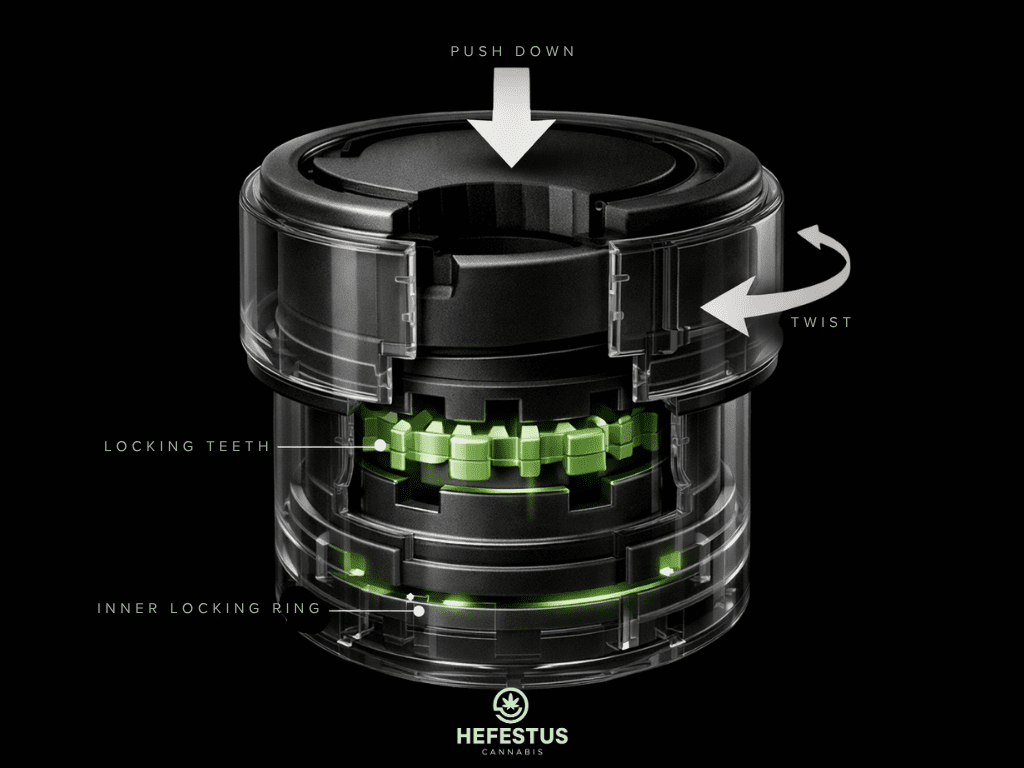
This is the same mechanism as a prescription pill bottle — familiar, reliable, and widely used for premium plastic and glass pre roll tubes. It requires two simultaneous actions, which is exactly what makes it child-resistant.
How to identify it: A plastic or glass tube with a wider, often ribbed or textured cap. Instructions like “Push Down & Turn” may be printed on the cap surface.
How to open it:
- Hold the tube body firmly in your non-dominant hand, grip close to the cap.
- Place your thumb or the heel of your palm directly on the center of the cap.
- Press straight down with steady pressure — you should feel the cap sink 1–2mm.
- While maintaining that downward pressure, twist the cap counterclockwise.
- Once the cap spins freely, lift it off.
Common mistake: Twisting without pressing first. The downward pressure is what disengages the safety teeth inside the mechanism. Without it, the cap just clicks in place and goes nowhere.
Pro tip: If your thumb isn’t generating enough force, switch to the heel of your palm for broader, more even pressure across the cap surface.
Screw-Top Glass Pre Roll Tubes
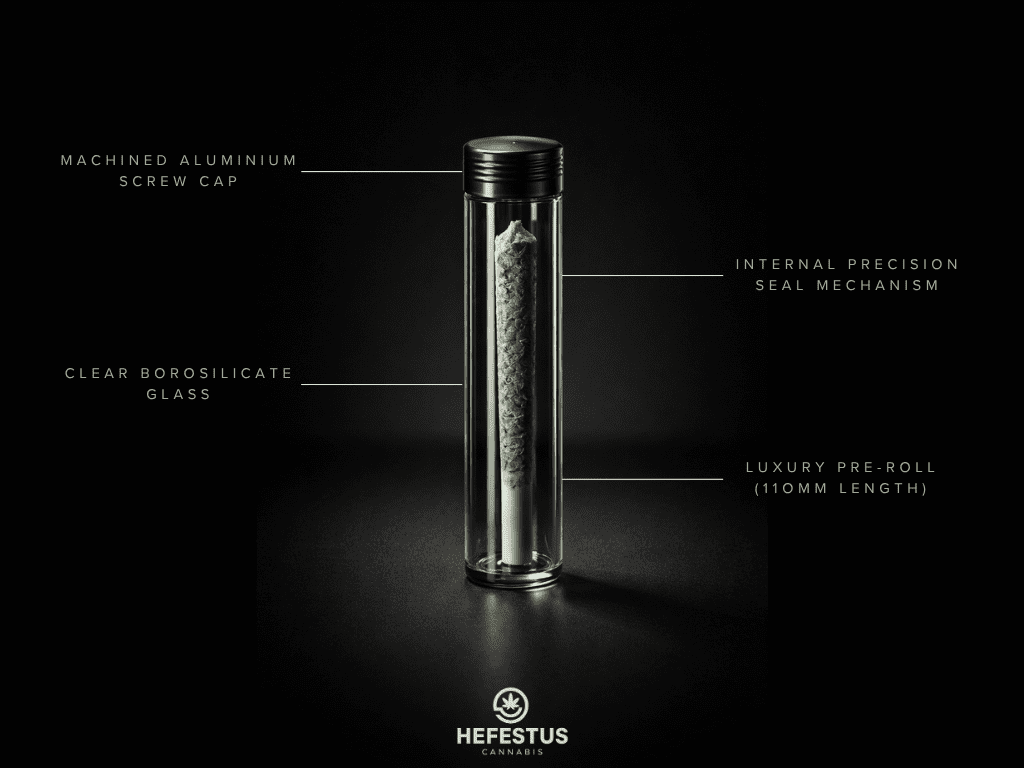
Glass tubes with aluminum or metal screw-top caps offer a sleek, premium aesthetic. They’re popular with infused pre-rolls and luxury brands.. Most screw-top glass tubes are not child-resistant — they rely on secondary packaging like exit bags or child-resistant outer boxes for compliance in regulated markets.
How to identify it: A clear, black, gold, or matte glass tube with a threaded metal cap, often aluminum in black, gold, or silver.
How to open it:
- Hold the glass tube body firmly in your non-dominant hand.
- Grip the cap with your dominant hand.
- Twist counterclockwise.
- Lift the cap off.
Some aluminum screw caps include interior padding to create a tighter seal. If the cap feels stuck, confirm you’re turning counterclockwise — it’s a surprisingly common error.
Cork-Top Glass Pre Roll Tubes
Cork-top tubes are among the most visually striking pre roll containers on the market — clean, natural-looking, and highly airtight. Brands considering premium infused formats often gravitate toward cork-top tubes precisely because the packaging signals the same craftsmanship as the product inside.. Three cork types are common: standard tapered corks, T-shaped corks, and champagne-style corks, named for the satisfying pop they make on removal. None are child-resistant by design.
How to open it:
- Grip the glass tube body firmly in one hand.
- Pinch the cork between your thumb and index finger.
- Wiggle gently from side to side while pulling upward.
- The cork will release — sometimes with an audible pop.
If the cork feels stuck, roll the tube between your palms for 20–30 seconds. Gentle warmth makes the cork more pliable without damaging the joint inside.
Super Seal Pre Roll Tubes
Super Seal tubes combine push-and-turn child resistance with a tamper-evident band and a gasket seal inside the cap — making them one of the most airtight, compliant, and tamper-proof pre roll containers available. Independent testing using USP 671 protocols found these to be genuinely airtight even after multiple openings.
How to identify it: A thicker-walled plastic tube, often with a tamper-evident shrink band around the cap and a slightly domed or spiral top.
How to open it:
- Remove the tamper-evident band if present — peel or tear it off.
- Press down firmly on the cap.
- Turn counterclockwise while maintaining downward pressure.
- The cap releases once the gasket clears the threads.
Slide-Lock and Clip-Lock Pre Roll Containers
These mechanisms appear on eco-friendly plastic tubes, ocean-plastic designs, and some paper box pre-roll packaging. Instead of a pop or twist, they use directional locks requiring alignment before opening.
Align-and-push (common on ocean-plastic tubes):
- Rotate the lid until a notch or arrow on the cap aligns with a dot on the tube body.
- Push the lid off in the indicated direction.
Clip-lock (common on paper box packaging):
- Locate the plastic latch on the side of the box.
- Push it inward in the direction indicated by the arrow.
- Slide the inner tray out from the opposite end.
Troubleshooting: What to Do When Your Pre Roll Container Won’t Open
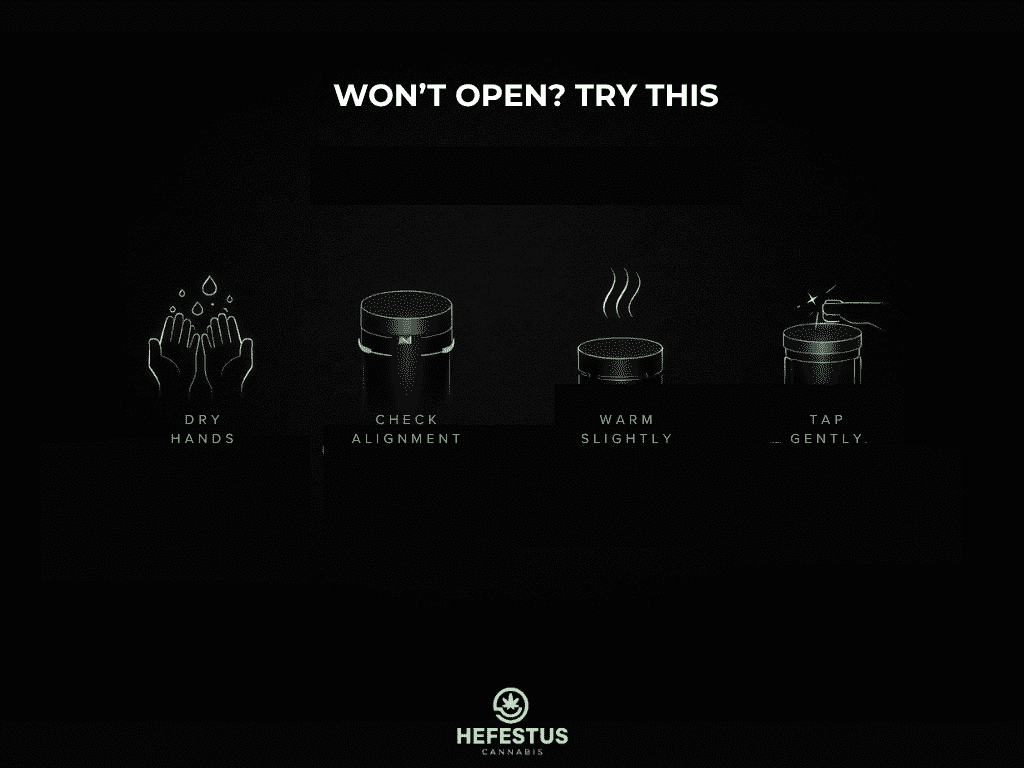
- Even the best-designed joint container can feel impossible when you’re using the wrong technique — or when there’s a genuine defect. Work through these steps before using force:
- Check alignment first. Some tubes require the cap to be in a specific rotational position before it releases. Look for arrows, dots, or embossed markings on both the cap and tube body.
- Dry your hands. Moisture reduces friction and grip. Dry your hands or wrap a rubber band around the tube body for extra traction.
- Warm the cap slightly. Rubbing the cap between your palms for 20–30 seconds makes plastic more pliable and helps push-and-turn mechanisms engage more cleanly.
- Try the warm water trick. Run warm — not boiling — water over the cap area for 20–30 seconds. Dry completely, then attempt the normal opening motion.
- Tap gently. A light tap of the cap against your palm or a folded towel can dislodge tiny plastic burrs from manufacturing — surprisingly effective on brand-new tubes.
- Never use: Pliers, knives, teeth, or hard surfaces. These damage both the tube and the pre-roll inside.
When it’s a defect: If the push-and-turn mechanism spins freely but never releases, if the tube is visibly warped, or if correct technique produces zero movement — that’s a manufacturing defect. Return it to the dispensary with the label intact. Most licensed retailers will swap it without issue.
Why Cannabis Packaging Uses Child-Resistant Tubes
For brands navigating these requirements, working with experienced pre roll packaging companies familiar with state-specific compliance standards can simplify the sourcing process significantly
- Legal compliance varies by state. The majority of U.S. states with legal cannabis require pre-rolls to be sold in ASTM D-3475 certified child-resistant packaging. Over 20 states additionally require packaging to be opaque — meaning clear tubes aren’t permitted regardless of child-resistance certification. States with opacity requirements include Alaska, Colorado, Connecticut, Michigan, Nevada, New Jersey, Pennsylvania, and Virginia, among others.
- Material regulations add another layer. New York requires all plastic pre roll tubes to include at least 25% post-consumer recycled material. New Mexico requires compostable or recyclable packaging. Vermont prohibits plastic packaging entirely.
- Tamper evidence is a separate requirement. Child resistance and tamper evidence are distinct legal obligations. Pop-top tubes on their own are generally not tamper evident. Manufacturers must add either a paper sticker seal — preferred, since plastic stickers can be removed and reapplied without visible damage — or a heat-shrink tamper-evident band around the cap.
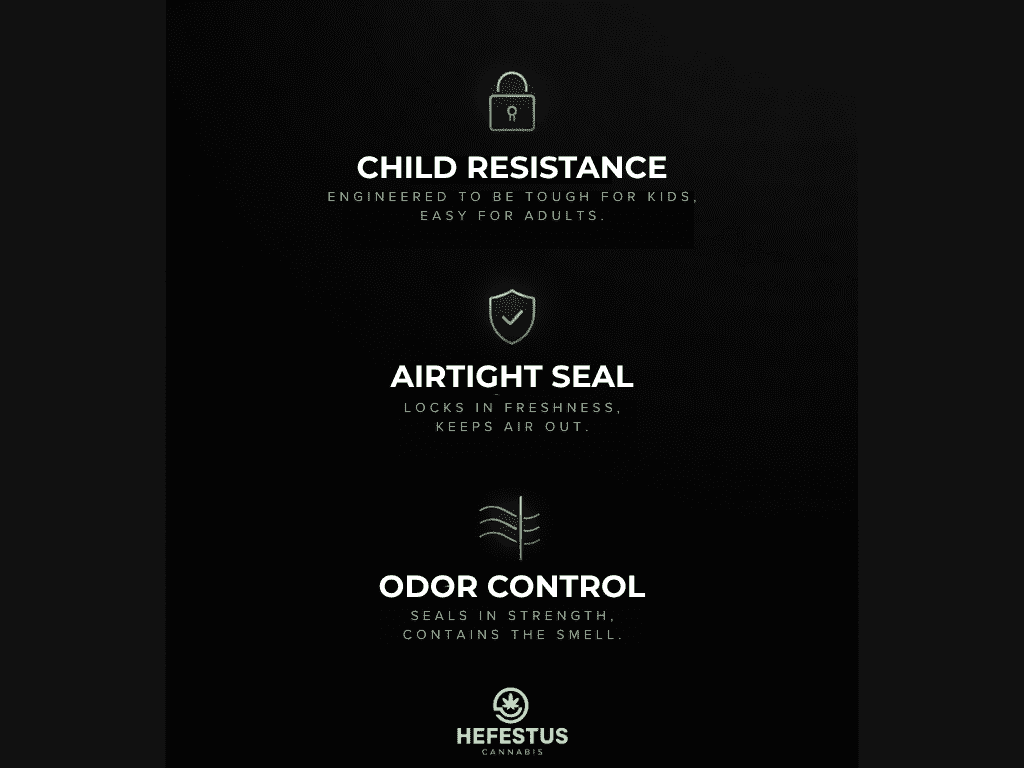
- Freshness is a product quality issue. Beyond compliance, an airtight seal protects the terpene profile and THC potency of the pre-roll. Trichomes — the resinous structures carrying cannabinoids and flavor compounds — become brittle and break off when exposed to excess air or low humidity, degrading the product before it’s ever lit.
Final Thoughts
Opening a pre roll tube goes from frustrating to effortless the moment you know what mechanism you’re dealing with. Pop-tops want you to squeeze the body. Push-and-turn caps want downward pressure before the twist. Cork tops want a wiggle and a pull. Slide locks want alignment before movement.
The child-resistant engineering that makes these containers feel difficult is the same design that protects children, preserves product quality, and keeps cannabis businesses legally compliant. It’s worth the two-second learning curve.
Key takeaways:
- Identify the tube type before attempting to open it — each mechanism requires a different motion
- For pop-tops, squeeze the tube body below the cap, not the cap itself
- For push-and-turn caps, downward pressure must come before the twist
- If a tube won’t open after correct technique, check for alignment markings or return it as a defect
- Child resistance, tamper evidence, opacity, and material requirements are separate legal standards that vary significantly by state