Washington Cannabis Laws
Washington was one of the first two states in the country to legalize recreational cannabis, and more than a decade later, it operates one of the most mature – and most regulated – cannabis markets in the world. Washington cannabis laws govern everything from how much you can carry in your pocket to how a multi-million dollar processing facility must operate. Whether you’re a consumer trying to stay on the right side of the law, a patient seeking medical access, or a business operator navigating Washington cannabis compliance, this guide covers everything you need to know.
Is Cannabis Legal in Washington State?
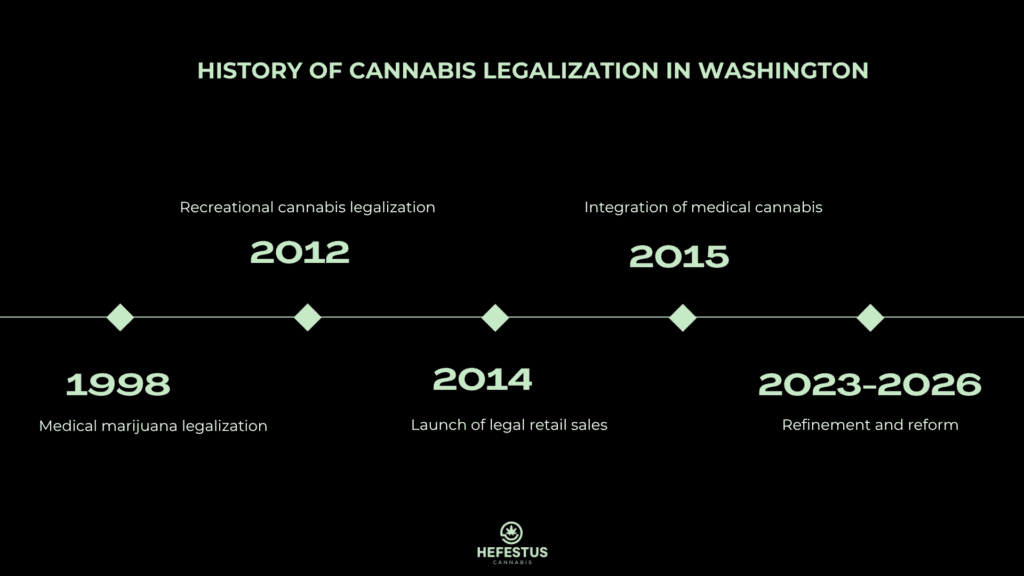
Yes – cannabis is fully legal in Washington State for adults 21 years of age and older for both recreational and medical use. But “legal” doesn’t mean “anything goes.” Washington’s cannabis industry is tightly regulated by the Washington State Liquor and Cannabis Board (WSLCB), which governs everything from cultivation and processing to retail sales and product testing.
Think of cannabis regulation the way you’d think of alcohol: legal to purchase, legal to consume in the right places, heavily taxed, and subject to strict rules about age, quantity, and conduct. If you’d get in trouble doing something with a bottle of whiskey, you’ll almost certainly get in trouble doing it with cannabis.
The key distinction that matters most:
- Recreational use is legal for adults 21+, with defined possession limits
- Medical use is legal for qualifying patients of any age with a valid authorization – and comes with significantly higher possession limits and tax exemptions
History of Cannabis Legalization in Washington
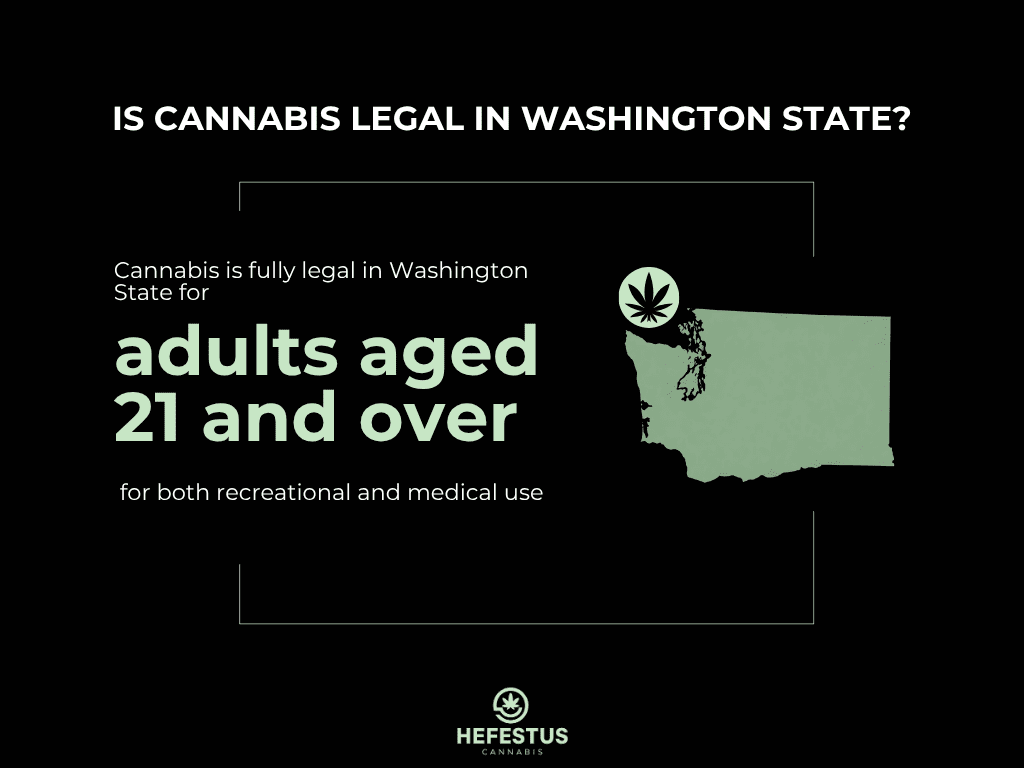
Medical Marijuana Legalization (1998)
Washington’s cannabis story begins in 1998, when voters passed Initiative 692, making Washington one of the earliest states to legalize medical marijuana. The law granted patients with qualifying medical conditions access to cannabis as a therapeutic option. It was a foundational step – but also an incomplete one, creating a gray-market medical system that operated largely outside formal regulation for more than a decade.
Recreational Cannabis Legalization (2012)
In November 2012, Washington voters approved Initiative 502, making Washington and Colorado the first two states in the United States to legalize recreational cannabis for adults. I-502 didn’t just legalize possession – it created an entire regulated framework: licensed producers, licensed processors, licensed retailers, and a state excise tax. It was, at the time, the most comprehensive cannabis legalization framework in the world.
Launch of Legal Retail Sales (2014)
Legal cannabis retail sales officially began in Washington on July 8, 2014. The early days were chaotic – demand massively outpaced supply, prices were high, and the number of licensed stores was limited. But the market matured quickly.
Integration of Medical Cannabis (2015)
The Cannabis Patient Protection Act (CPPA) brought medical cannabis under the WSLCB’s regulatory umbrella in 2015, creating a unified licensing system and establishing the voluntary patient registry that unlocks higher possession limits and tax exemptions for registered patients.
2023–2026: Refinement and Reform
Washington has continued to refine its cannabis laws in recent years – expanding employee protections, regulating hemp-derived products, and addressing licensing equity. Notably, multiple home-grow bills introduced between 2021 and 2026 have all failed, meaning recreational home cultivation remains illegal in Washington despite being legal in most other legalization states. The most recent attempt, SB 6204, was killed in February 2026.
A 2026 bill (HB 2152) did pass, permitting qualifying medical patients to use cannabis in specified healthcare facilities – a meaningful step forward for patient access.
Washington Cannabis Possession Laws
Legal Possession Limits for Recreational Users (21+)
Washington law allows adults 21 and older to possess the following at one time:
| Product Type | Legal Limit |
| Cannabis flower (usable marijuana) | 1 ounce |
| Marijuana-infused edibles (solid form) | 16 ounces |
| Marijuana-infused products (liquid form) | 72 ounces |
| Cannabis concentrates | 7 grams |
These limits apply to what you carry on your person or keep in your possession. Buying from a licensed store is legal; buying from an unlicensed source is not, regardless of the quantity.
Higher Possession Limits for Medical Patients
Registered medical cannabis patients in Washington’s voluntary patient database enjoy significantly higher possession limits:
| Product Type | Medical Limit |
| Cannabis flower | 24 ounces |
| Solid edibles | 48 ounces |
| Infused liquid | 1.69 gallons |
| Concentrates | 28 grams |
Medical patients may also cultivate cannabis at home – a right that recreational users do not have. Registered patients can grow up to 15 plants per household (with up to 6 per patient based on their healthcare provider’s recommendation). Unregistered patients with a valid authorization may grow up to 4 plants.
Penalties for Illegal Possession
Possession over the legal limit is a criminal offense:
- Over 1 oz but under 40 grams (for adults without medical authorization): misdemeanor
- Over 40 grams: felony, carrying up to 5 years in prison and a $10,000 fine
Selling or providing cannabis to anyone under 18 years old carries penalties of up to 10 years in prison and a $10,000 fine – even if no money changed hands.
Public Consumption and DUI Laws
Where You Can (and Can’t) Use Cannabis
Washington law protects private cannabis use. You can consume cannabis in a private residence, provided the property owner permits it. Hotel rooms may also be permissible if the establishment allows smoking or vaping in designated rooms.
Everywhere else is off-limits. Washington law prohibits cannabis use in:
- Streets, sidewalks, alleys, and parking areas
- Public parks – including state and national parks
- Public hiking trails and ski resorts
- Bars, restaurants, and concert venues
- College and university campuses
- Vehicles (whether moving or parked on a public road)
- Any federal property (where federal law applies regardless of state law)
- Within 1,000 feet of a school or drug-free zone
Public consumption carries a $100 fine. More serious violations – like consuming in front of minors or on federal property – can carry heavier consequences.
Property managers and housing providers can also restrict cannabis use on their properties, even for legal-age adults or medical patients. Always check your lease and local rules before consuming.
Cannabis DUI Laws in Washington
Driving under the influence of cannabis is illegal and treated similarly to alcohol DUI. Washington’s legal THC limit for drivers is:
- 5 nanograms of THC per milliliter of blood for adults 21 and older
- Any detectable amount for drivers under 21 – a zero-tolerance policy
A driver can be charged with DUI even below the 5ng/ml threshold if an officer observes signs of impairment. Research suggests it can take 3 to 6 hours for some people to drop below the legal limit after use, and edibles can remain in your system considerably longer.
Penalties for cannabis DUI include jail time, fines, license suspension, and possible vehicle seizure. Having an open container of cannabis in a vehicle is separately illegal.
The rule is simple: if you’re unsure, don’t drive. Call a rideshare, taxi, or designated driver.
Washington Cannabis Business Regulations
The Regulatory Authority: Washington State Liquor and Cannabis Board
All cannabis business activity in Washington is overseen by the Washington State Liquor and Cannabis Board (WSLCB). The WSLCB licenses producers, processors, and retailers; sets compliance standards; conducts inspections; and enforces violations. Only entities licensed by the WSLCB may legally cultivate, process, or sell cannabis in Washington.
As of early 2025, Washington had 1,641 active cannabis licenses, including 157 producer licenses, 195 processor licenses, 794 producer-processor licenses, 471 retail licenses, 10 cooperative licenses, and 12 transportation licenses. (Cannabusinessplans)
Cannabis Business Licensing in Washington
Washington recognizes three primary license categories:
Cannabis Producer (Cultivation)
Producers are licensed to cultivate cannabis plants. The WSLCB limits canopy size per license to manage supply. A 2024 analysis estimated that Washington’s maximum production capacity reached 2.6 million pounds of cultivated output, while only about 1.1 million pounds was needed to meet demand Washington State Legislature – meaning the state significantly overproduces, which has driven prices downward across the market.
Cannabis Processor (Manufacturing)
Processors transform raw cannabis into retail-ready products: extracts, concentrates, edibles, vape cartridges, pre-rolls, and infused beverages. In 2023, flower, vapes, and pre-rolls together accounted for 77% of Washington’s retail cannabis sales. (Washington State Legislature)
Cannabis Retailer
Retailers are the only entities legally permitted to sell cannabis directly to consumers. Sales are restricted to adults 21 and older and to registered medical patients. A single business may hold up to five retail licenses or three producer and/or processor licenses, but retailers cannot simultaneously hold producer or processor licenses.
Licensing requirements across all categories include comprehensive background checks, detailed security plans, compliant facility design, operational compliance documentation, and financial disclosures.
Washington Cannabis Compliance Requirements
Operating a compliant cannabis business in Washington means meeting continuous obligations across several areas:
Product Testing – All cannabis products must be tested by an accredited laboratory before retail sale, covering potency, pesticides, heavy metals, microbials, and residual solvents. Products that fail testing cannot enter the retail supply chain.
Inventory Tracking – Washington uses a seed-to-sale tracking system to monitor cannabis from cultivation through retail sale. Every plant, batch, and product must be logged. Gaps in tracking are a compliance red flag and a common source of violations.
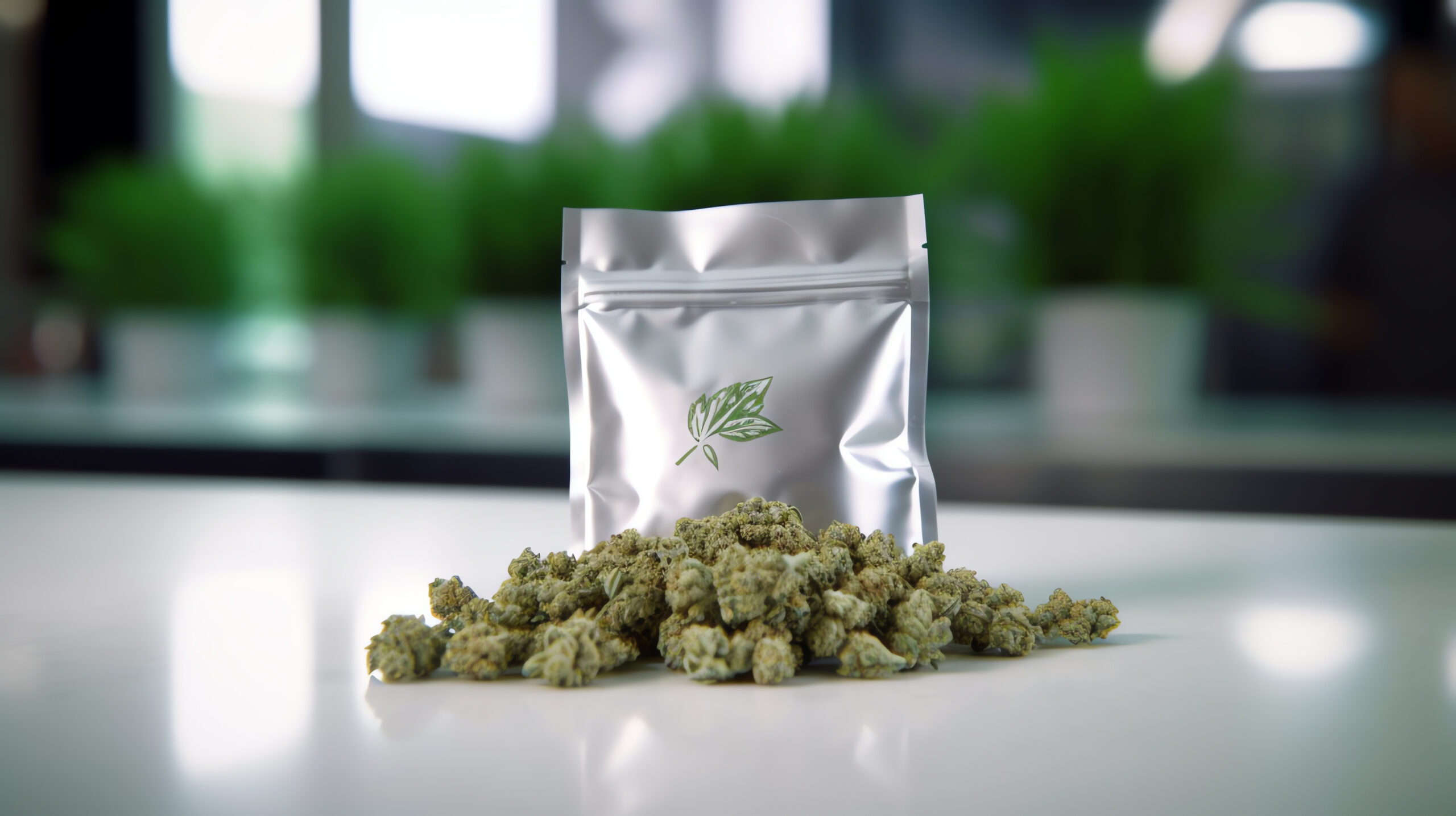
Packaging and Labeling – Packaging must be child-resistant and opaque. Labels must display THC and CBD content, serving size, batch number, test results, and required health warnings. Products cannot use imagery or language that appeals to minors.
Regulatory Inspections – The WSLCB conducts unannounced compliance inspections of licensed facilities. Violations can result in fines, license suspension, or revocation.
Washington Cannabis Taxes
Washington’s cannabis tax structure is one of the highest in the nation. The primary tax is a 37% excise tax applied at the point of retail sale. On top of that, Washington’s standard 6.5% retail sales tax also applies, with local sales taxes adding another 1–3% in many jurisdictions. The combined effective rate often exceeds 40%.
One important exception: registered medical cannabis patients purchasing from a medically endorsed retailer are exempt from the excise tax, making their purchases more affordable. (Washingtonstatecannabis)
Where the money goes: healthcare received more than half of Washington’s marijuana tax revenues in 2024, with the general fund receiving roughly a fifth. (The Motley Fool)
Cannabis tax revenue in Washington grew from $64.6 million in 2015 to a peak of $555.4 million in 2021, declining to $454.7 million by 2024. (Washingtonstatecannabis)
Washington Cannabis Industry Statistics
Washington’s cannabis market is large, mature, and in a period of price-driven contraction rather than volume decline:
- Peak sales reached approximately $1.47 billion in 2021. (Washingtonstatecannabis)
- Washington is expected to have generated approximately $1.2 billion in cannabis sales in 2024. Leafly
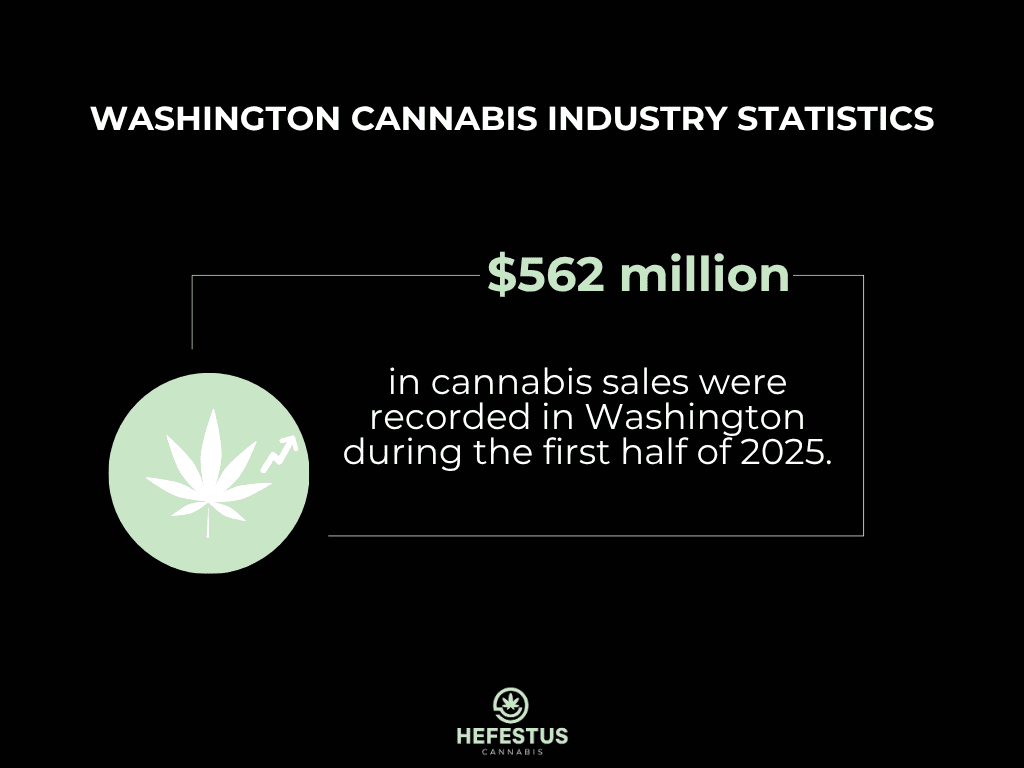
- Washington recorded $562 million in cannabis sales during the first half of 2025, with annual revenue projected at $1.1 to $1.2 billion. (Cannabusinessplans)
- 2024 tax revenue: $454.7 million
- Active licenses (2025): 1,641
- Top product categories (2023): flower, vapes, and pre-rolls – 77% of sales combined
While Washington’s cannabis sales have been falling in recent years, this is due to lower prices rather than lower sales volumes – according to local retailers and the WSLCB, sales volume remains steady as the market matures and supply increases. (Cannabusinessplans)
Cannabis Production and Manufacturing in Washington
Washington’s cannabis supply chain runs from cultivation through to the retail shelf:
- Cultivation – Licensed producers grow cannabis under canopy limits set by the WSLCB. Washington’s climate supports both indoor and outdoor production.
- Processing and Extraction – Licensed processors transform raw plant material into consumer products using CO₂, ethanol, or hydrocarbon extraction methods.
- Product Manufacturing – Processors manufacture finished goods: pre-rolls, vape cartridges, infused edibles and beverages, topicals, tinctures, and capsules.
- Packaging and Distribution – Products are packaged in compliant, child-resistant packaging, labeled per WSLCB requirements, and transported by licensed carriers.
- Retail Sale – Licensed retailers sell to consumers 21+ and to registered medical patients. Medical endorsement allows retailers to serve patients and offer the tax exemption.
Precision manufacturing equipment – including filling machines, extraction systems, and packaging automation – plays a central role in the efficiency and compliance of cannabis processing operations. Hefestus builds machinery purpose-built for this regulated environment.
Federal Status of Cannabis
Despite Washington’s robust legal framework, cannabis remains a Schedule I controlled substance under federal law. This creates ongoing real-world complications:
- Banking: Many cannabis businesses can’t access traditional banking, which is why many dispensaries operate cash-only
- Federal property: Cannabis use is illegal on any federal land regardless of state law
- Interstate transport: You cannot legally transport cannabis across state lines, even between two legal states
- Employment: Federal employees may face drug testing that doesn’t recognize state-legal cannabis use
Federal reform proposals – including the MORE Act and Cannabis Administration and Opportunity Act – aim to remove cannabis from the Controlled Substances Act, but federal prohibition remains in effect as of 2025.
Future Outlook for Washington Cannabis Laws
- Home Cultivation remains the most contentious gap in Washington law. Every major legalization state except Washington now permits adults to grow cannabis at home. Multiple bills – SB 6204, HB 2614, HB 1449 – have failed, but advocacy continues and pressure will intensify as home grow becomes normalized in neighboring states.
- Tax Reform is a live issue. Washington’s 37% excise tax is among the two highest nationally, and high taxes are widely credited with sustaining Washington’s illicit market.
- Employment Protections currently cover job seekers but not current employees. Bills to protect workers who test positive for off-duty use have been introduced but not passed.
- Healthcare Facility Access: HB 2152, signed in 2026, now permits qualifying medical patients to use cannabis in specified healthcare facilities – a significant expansion of patient rights.
- Market Consolidation: As prices continue to fall and smaller operators struggle, Washington’s cannabis industry will likely consolidate among producers and processors over the next few years.
FAQ: Washington Cannabis Laws
Is cannabis legal in Washington state?
Yes. Recreational cannabis is legal for adults 21 and older. Medical cannabis is legal for qualifying patients with a valid authorization from a licensed healthcare provider.
How much cannabis can you possess in Washington?
Recreational users may possess up to 1 ounce of flower, 16 ounces of solid edibles, 72 ounces of liquid edibles, and 7 grams of concentrates. Registered medical patients have significantly higher limits.
Can you grow cannabis at home in Washington?
Recreational users cannot – it remains illegal despite multiple legislative attempts. Registered medical patients may grow up to 6 plants per patient (15 per household), and unregistered patients with a valid authorization may grow up to 4 plants.
Who regulates cannabis businesses in Washington?
The Washington State Liquor and Cannabis Board (WSLCB) regulates all cannabis business activity, including licensing, compliance, and enforcement.
Where can I legally consume cannabis in Washington?
Only on private property where the owner permits it. Public consumption – streets, parks, vehicles, public events – is illegal and subject to fines.
Do medical patients pay cannabis taxes in Washington?
Registered medical cannabis patients purchasing from a medically endorsed retailer are exempt from the 37% excise tax.
What is the DUI limit for cannabis in Washington?
5 nanograms of THC per milliliter of blood for drivers 21 and older. Drivers under 21 face zero tolerance – any detectable THC is illegal while driving.
Key Takeaways
- Cannabis is legal for adults 21+ with strict rules on possession limits, where you consume, and driving
- Medical patients get higher possession limits, home grow rights, and tax exemptions – registration is worth it
- Home grow remains illegal for recreational users despite years of sustained advocacy
- Businesses must be licensed by the WSLCB and meet continuous seed-to-sale compliance obligations
- The 37% excise tax makes Washington one of the most heavily taxed cannabis markets in the country
- Federal prohibition still affects banking, employment, and interstate transport
Explore how Hefestus supports cannabis manufacturers with precision machinery built for the regulated Washington market.
Conclusion
Washington cannabis laws represent one of the most comprehensive – and most demanding – regulatory frameworks in the United States. For consumers, the rules are clear: stay within your possession limits, keep consumption on private property, never drive impaired, and always buy from a licensed retailer. For medical patients, registration unlocks real benefits – higher possession limits, home grown rights, and exemption from the 37% excise tax. For businesses, Washington cannabis laws demand continuous attention across licensing, product testing, seed-to-sale tracking, and packaging compliance.
One thing is certain: the legal landscape will keep evolving. Home grown legislation will return. Tax reform is inevitable. Federal rescheduling remains a possibility. Staying informed isn’t optional – it’s essential for anyone operating in or consuming from this market. Bookmark this guide and check back as the laws develop.