Arizona Cannabis Laws

Arizona cannabis laws have undergone a dramatic transformation over the past decade — evolving from strict prohibition to one of the most comprehensive legal frameworks in the American Southwest. Since voters passed Proposition 207 in November 2020, adults 21 and older can legally possess, purchase, and cultivate cannabis without a medical card.
Whether you’re a resident, a first-time visitor to Greater Phoenix, or a business looking to enter the regulated market, understanding Arizona’s cannabis regulations is essential. This guide breaks down everything you need to know — from possession limits and consumption rules to business licensing, taxes, and penalties.
Is Recreational Cannabis Legal in Arizona?
Yes – and the answer has been yes since November 30, 2020, when Proposition 207, the Smart and Safe Arizona Act, took effect. Arizona voters approved the measure with a clear majority, making the state one of the first in the Southwest to fully legalize adult-use cannabis.
Under current Arizona cannabis law, any adult aged 21 or older can legally possess, purchase, consume, and cultivate limited amounts of cannabis – no medical card required. Retail dispensaries began selling recreational cannabis in January 2021, and the market has grown rapidly ever since.
Key Legal Authority: Arizona cannabis regulations are primarily governed by A.R.S. Title 36, Chapter 28.2 (Prop 207 provisions) and A.R.S. § 13-3405 (the state’s criminal marijuana statute). These two bodies of law overlap, and understanding how they interact is critical for both consumers and businesses.
A Brief History of Cannabis Legalization in Arizona
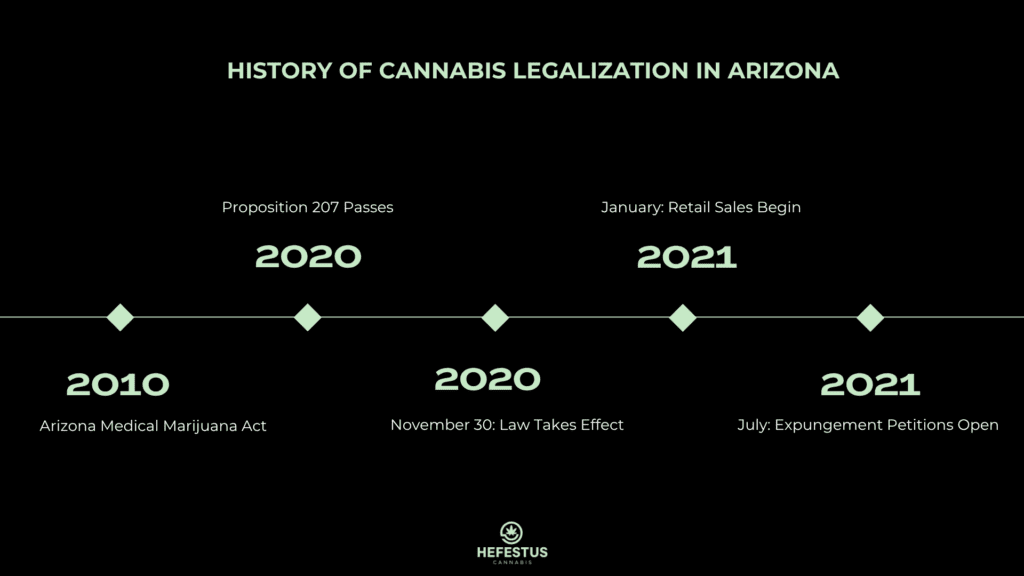
2010 – Arizona Medical Marijuana Act (Prop 203)
Arizona voters narrowly approved medical cannabis – by just over 50% – creating a licensed dispensary system and allowing qualifying patients to possess up to 2.5 ounces for debilitating conditions including cancer, HIV/AIDS, glaucoma, Crohn’s disease, chronic pain, and severe muscle spasms.
November 2020 – Proposition 207 Passes
The Smart and Safe Arizona Act legalized recreational cannabis for adults 21+. The law established possession limits, home cultivation rights, a retail licensing framework, a 16% excise tax, and – for the first time in state history – a pathway to expunge prior marijuana convictions.
November 30, 2020 – Law Takes Effect
Adults could legally possess and cultivate cannabis the same day the law was certified.
January 2021 – Retail Sales Begin
Licensed dispensaries began selling recreational cannabis to adults without a medical card – one of the fastest retail launch timelines of any legalization state.
July 12, 2021 – Expungement Petitions Open
Individuals with eligible prior marijuana convictions could begin petitioning courts for expungement, a landmark civil rights provision of Prop 207.
Arizona Cannabis Possession Laws: What’s Legal, What’s Not
Arizona cannabis possession laws establish clear quantity thresholds. Staying within legal limits is the most fundamental thing any adult consumer needs to understand.
| Amount | Classification | Penalty |
| Up to 1 oz flower / 5g concentrate | ✓ Legal (21+) | None |
| 1 oz – 2.5 oz | Petty Offense | Fine up to $300 |
| 2.5 oz – 2 lbs | Class 6 Felony | 4 months – 2 years |
| 2 lbs – 4 lbs | Class 5 Felony | 6 months – 2.5 years |
| 4 lbs or more | Class 4 Felony | 1 – 3.75 years |
| 5g – 12.5g concentrate | Petty Offense | Fine up to $300 |
| 12.5g+ concentrate | Felony | 1 – 3.75 years |
Under-21 possession: For adults aged 18–20, possessing under one ounce is a civil penalty of up to $100 plus mandatory drug education. A second offense becomes a petty offense; a third becomes a Class 1 misdemeanor.
Where Can You Consume Cannabis in Arizona?
Legal: Private property with the owner’s permission. Your own home. Cannabis-friendly lodging such as Bud and Breakfast properties or The Clarendon Hotel in Phoenix.
If you’re exploring Arizona’s dispensary market, terpene infused pre-rolls have become one of the most popular product formats available at licensed retailers statewide.
Petty Offense (fine up to $500): Any public place or open space – parks, sidewalks, outdoor events. Arizona’s Smoke-Free Arizona law also prohibits cannabis smoking in most enclosed public places and workplaces.
Serious Federal Risk: Federal land, national parks, and tribal territories. Marijuana remains federally illegal – penalties can reach $5,000 and six months in jail.
Most hotels prohibit cannabis smoking. If you need to get around while impaired, Greater Phoenix offers Metro Rail, Valley Metro bus, Uber, Lyft, and Waymo autonomous rideshare.
Products like infused pre-rolls have grown in popularity among Arizona consumers — understanding what you’re purchasing helps ensure you stay within both possession and consumption rules.
Home Cultivation: Growing Cannabis in Arizona
Arizona permits adults to grow cannabis at home under clear rules:
- 6 plants per adult at a private residence
- 12 plants maximum per household when two or more adults reside there
- Plants must be in a locked, enclosed area not visible to the public
- Cultivation is for personal use only – selling homegrown cannabis without a license is a felony
- Adults may transfer up to 6 plants to another adult at no charge, provided the transfer is not advertised or promoted
Important: Exceeding the plant limit – even by one – can trigger felony charges. Growing more than 6 plants up to 2 lbs is a Class 5 felony (6 months – 2.5 years). More than 4 lbs produced rises to a Class 3 felony (2 – 8.75 years).
Cannabis DUI Laws in Arizona
Proposition 207 did not change Arizona’s DUI laws. Driving under the influence of cannabis remains illegal. However, the law clarified an important legal standard: the mere presence of THC metabolites in your blood is not sufficient, by itself, to convict you of a DUI. Prosecutors must prove you were “impaired to the slightest degree” – a meaningfully higher evidentiary bar than a simple metabolite test.
That said: do not drive, operate a boat, or fly an aircraft if you are impaired by cannabis.
Your 4th Amendment Rights Under Prop 207
One of the most significant – and least publicized – provisions of Prop 207 concerns police search powers. Under A.R.S. § 36-2852(C), the odor of marijuana or burnt marijuana does not, by itself, constitute “reasonable articulable suspicion” of a crime.
This means police can no longer use the smell of cannabis as a standalone justification for a warrantless search of your person, vehicle, or home. This is a meaningful expansion of consumer rights – if you believe your rights were violated in a stop or search, consult a criminal defense attorney immediately.
Expungement of Prior Cannabis Convictions
Prop 207 created Arizona’s first-ever cannabis expungement pathway. Eligible offenses include:
- Possessing, consuming, or transporting 2.5 oz or less (max 12.5g concentrate)
- Possessing, transporting, or cultivating 6 or fewer plants at a primary residence
- Possessing or using marijuana paraphernalia
Expungement is not automatic – a petition must be filed by the defendant, their attorney, or even a prosecutor. Large-quantity trafficking convictions are not eligible. Courts may hold hearings before granting petitions.
Arizona Cannabis Business Regulations
The Arizona Department of Health Services (ADHS) licenses and regulates all commercial cannabis activity. The Arizona Department of Revenue (ADOR) handles tax collection. Any business in the cannabis supply chain must comply with both agencies.
| Business Type | ADHS License | TPT License | MET Number | Business Code |
| Cultivation / Grow Facility | ✓ | ✗ | ✗ | N/A |
| Wholesale Distributor | ✓ | ✓ | ✗ | 017 |
| Manufacturer (oils, edibles, extracts) | ✓ | ✓ | ✗ | 017 |
| Adult-Use Retail Dispensary | ✓ | ✓ | ✓ | 420 |
| Medical Marijuana Dispensary | ✓ | ✓ | ✓ | 203 |
| Pipes / Accessories Retailer | ✗ | ✓ | ✗ | 017 |
| Grow Supplies Retailer | ✗ | ✓ | ✗ | 017 |
Tax Registration: Cannabis retailers must obtain both a Transaction Privilege Tax (TPT) license and a Marijuana Excise Tax (MET) registration number. MET registration cannot be completed online – it requires the paper Form JTM-1, mailed to ADOR. TPT licenses renew annually.
Arizona Cannabis Tax Structure
Adult-use cannabis sales are subject to multiple tax layers:
- 16% State Marijuana Excise Tax – applies to all adult-use sales only
- State Transaction Privilege Tax (TPT) – approximately 5.6%
- Local / County TPT – varies by jurisdiction
Medical marijuana is subject to TPT only – the 16% excise tax does not apply to medical sales. Tax revenue funds public education, public safety, and transportation infrastructure statewide.
Packaging, Labeling & Compliance Requirements
All cannabis products in Arizona’s regulated market must meet strict standards:
- Child-resistant, tamper-evident packaging
- Accurate THC/CBD potency labeling
- Required health warnings
- Batch tracking numbers for supply chain traceability
- No marketing imagery that could appeal to minors
Edible food products require pre-market authorization from ADHS before a dispensary may carry them.
Federal Cannabis Law: The Critical Caveat
Cannabis remains federally illegal under the Controlled Substances Act regardless of Arizona state law. Practical consequences include:
- Possession on federal land (national parks, military bases) – up to 1 year and $1,000 fine for first offense
- Interstate transport across Arizona’s border – federal felony, regardless of destination state’s laws
- Banking complications for cannabis businesses due to federal prohibition
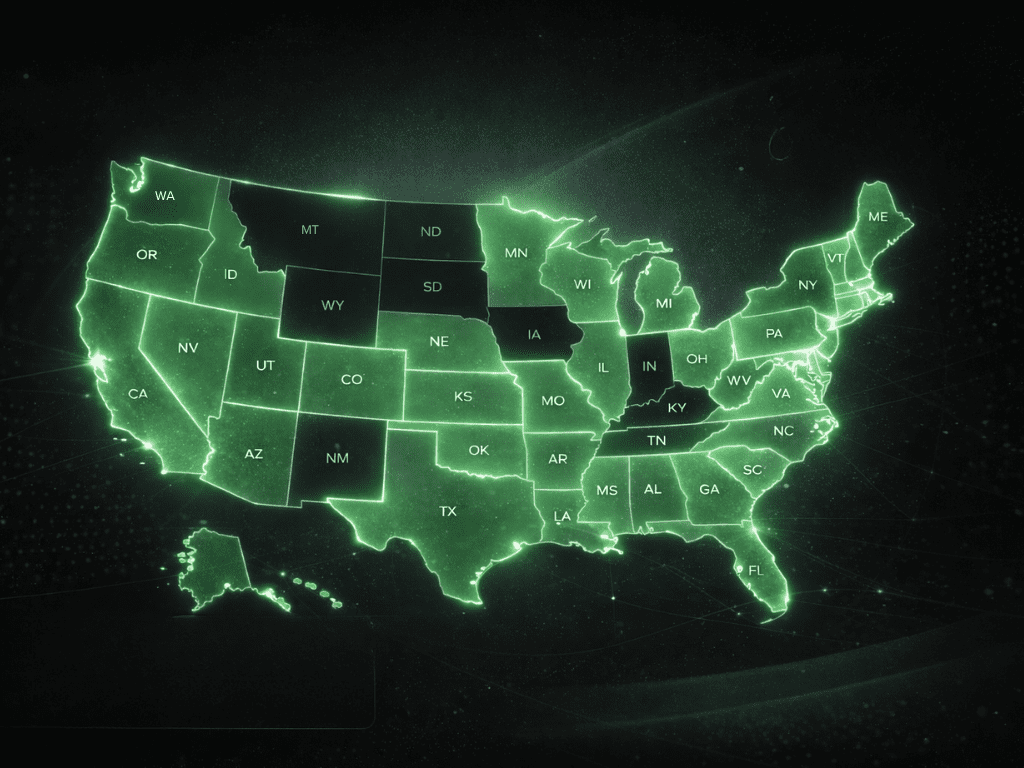
As of April 2026, 24 states plus Washington D.C. have fully legalized recreational cannabis. Four states – Idaho, Kansas, South Carolina, and Wyoming – remain fully illegal.
Future Outlook
Several developments are likely to shape Arizona’s cannabis regulations going forward: expanded home delivery programs, additional social equity licensing, tightening compliance requirements around manufacturing and automation technology, and the potential impact of any federal rescheduling of cannabis.
Frequently Asked Questions
Is recreational cannabis legal in Arizona?
Yes, for adults 21 and older since November 30, 2020. No medical card required.
How much cannabis can you legally possess?
Up to 1 ounce of flower and 5 grams of concentrate. Between 1–2.5 oz is a petty offense (up to $300 fine). Above 2.5 oz enters felony territory.
Can you grow cannabis at home?
Yes – up to 6 plants per adult, 12 per household, in a locked enclosed space, for personal use only.
Do you need a medical card?
No. Medical cards do offer advantages: higher possession limits (2.5 oz) and exemption from the 16% excise tax.
Can your employer still drug test you?
Yes. Prop 207 did not restrict employer rights to enforce drug-free workplace policies.
Can police search your car based on the smell of cannabis?
Not based on smell alone. Under A.R.S. § 36-2852(C), odor is insufficient by itself to justify a warrantless search.
Key Takeaways
- Arizona fully legalized adult-use cannabis in 2020 via Prop 207 – adults 21+ can possess, cultivate, and purchase legally
- Possession limits: 1 oz flower, 5g concentrate. Home cultivation: 6 plants per adult, 12 per household
- Public consumption is illegal and subject to fines – federal land carries far more serious penalties
- Cannabis DUI requires proof of actual impairment, not just the presence of metabolites
- Police cannot use cannabis odor alone to justify a warrantless search
- A 16% excise tax applies to adult-use sales; medical cannabis is exempt
- Prior convictions may be eligible for expungement – petitions must be actively filed
- Cannabis businesses cannot register for MET online – paper Form JTM-1 is required
- Federal law still prohibits cannabis regardless of state legalization
- Arizona is among 24+ fully legal states as of 2026, one of the largest cannabis markets in the Southwest
Conclusion
Arizona cannabis laws represent one of the most well-developed legal cannabis frameworks in the United States. From the landmark passage of Proposition 207 to a thriving regulated market with hundreds of licensed dispensaries, Arizona has built a clear and comprehensive system for adult-use cannabis — one that balances consumer freedoms with strict compliance requirements.
Whether you’re a casual consumer, a medical patient, or a cannabis entrepreneur, staying informed about Arizona’s evolving regulations is the smartest move you can make. Laws change, penalties are real, and the difference between legal and illegal often comes down to a single ounce. Know the rules, respect the limits, and enjoy what Arizona’s legal cannabis market has to offer — responsibly.