Nevada Cannabis Laws
Nevada cannabis laws establish one of the most comprehensive legal frameworks for recreational and medical cannabis in the United States. Since voters approved legalization in November 2016, Nevada has built a regulated system covering everything from possession limits and home cultivation to licensed dispensaries and consumption lounges.
Whether you’re a resident, a Las Vegas visitor, or a business owner, understanding Nevada cannabis laws is essential to staying compliant. This guide covers everything you need to know — including the updated possession limits under Senate Bill 277 — so you can navigate the state’s cannabis landscape with confidence.
Is Cannabis Legal in Nevada?
Yes — cannabis is legal in Nevada for both medical and recreational use, making it one of a growing number of states with a fully legal adult-use market. Recreational cannabis has been legal since January 1, 2017, following the passage of Ballot Question 2 in November 2016, which 54% of Nevada voters supported.
Adults 21 and older may legally purchase, possess, and consume cannabis subject to specific quantity and location restrictions. The only legal point of purchase is a state-licensed dispensary — buying from unlicensed dealers remains a felony.
Nevada’s medical program, governed by NRS Chapter 678C, predates recreational legalization by nearly two decades. Medical cardholders gain access to higher possession limits, the ability to purchase between ages 18–20, and potential protections in certain employment contexts. Qualifying conditions include cancer, HIV/AIDS, PTSD, severe pain, seizures, glaucoma, and other chronic debilitating conditions.
History of Cannabis Legalization in Nevada
Medical Cannabis Legalization
Nevada’s cannabis story begins in 1998 and 2000, when voters twice approved Ballot Question 9 — a constitutional amendment that legalized medical marijuana. However, without a legal sales framework, approved patients could only cultivate their own plants for the next decade-plus. It wasn’t until 2013, when Governor Brian Sandoval signed Senate Bill 374, that Nevada established a licensed dispensary system.
Recreational Legalization
Two earlier attempts to legalize recreational marijuana — in 2002 and 2006 — failed at the ballot. The third attempt, the Initiative to Regulate and Tax Marijuana (Question 2), succeeded in November 2016 with 54% of the vote. The law took effect January 1, 2017, making Nevada one of the first states with a functioning adult-use market.
When Dispensaries Opened
The first licensed medical dispensaries opened in 2015. Recreational sales began on July 1, 2017, under an “early start” program that allowed medical dispensaries to sell to adults before full recreational infrastructure was in place. As of early 2025, the Cannabis Compliance Board has issued licenses to over 387 cannabis businesses statewide, including 103 active dispensaries.
Nevada Cannabis Possession Laws
Nevada sets clear, tiered possession limits. Staying within them means no legal risk. Exceeding them — even slightly — can trigger penalties.
Flower Possession Limits
As of January 1, 2024, Senate Bill 277 raised Nevada’s recreational possession limit. Adults 21 and older may now legally possess up to 2.5 ounces (approximately 70 grams) of cannabis flower. Medical marijuana cardholders are also permitted to possess up to 2.5 ounces within any 14-day period, which must remain sealed in a container when carried in public.
Concentrate Possession Limits
For cannabis concentrates — including wax, shatter, oils, and similar extracts — the legal possession limit is ¼ ounce (7 grams) for recreational users. Adults may possess this amount when purchased from a licensed dispensary.
Gifting Cannabis
You can legally gift up to 1 ounce of cannabis flower or ⅛ ounce of concentrated marijuana to another adult 21 or older — provided no money, goods, or services change hands. Gifting becomes an illegal sale the moment any form of compensation is involved.
Penalties for Exceeding Limits
| Offense | Classification | Max Incarceration | Max Fine |
| Possession up to 2.5 oz (personal use) | No Penalty | None | $0 |
| Possession over 2.5 oz | Misdemeanor | N/A | $600 |
| Possession or use in public | Misdemeanor | N/A | $600 |
| Sale/delivery: 1 oz–100 lbs (1st offense) | Felony (Cat. D) | 1–4 years* | $5,000 |
| Sale/delivery: 1 oz–100 lbs (2nd offense) | Felony (Cat. C) | 1–5 years* | $10,000 |
| Sale/delivery: 100–2,000 lbs | Felony (Cat. C) | 1–5 years* | $25,000 |
| Sale/delivery: 10,000 lbs or more | Felony (Cat. A) | 5 years–life* | $200,000 |
| Sale to a minor | Felony (Cat. A) | 5 years–life* | $20,000 |
| Cultivation of 12+ plants | Felony (Cat. E) | 1–4 years* | $5,000 |
*Mandatory minimum sentence applies.
Public Consumption Laws in Nevada
This is where many visitors — especially Las Vegas tourists — run into trouble. Nevada law prohibits cannabis consumption in all public spaces. The list of off-limits locations is extensive:
- The Las Vegas Strip and all sidewalks
- Casino floors and gaming areas
- Restaurants, bars, and nightclubs
- All city, county, and state parks
- Hotels and vacation rentals (unless explicitly permitted by the property)
- Vehicles — whether you’re driving or a passenger
- Any area visible to the general public
Public consumption is a criminal misdemeanor punishable by a fine of up to $600. Open cannabis containers in vehicles — even in the passenger area while parked — also violate Nevada law. All marijuana products must be in sealed, original packaging stored in the trunk or a locked compartment.
Cannabis Consumption Lounges
Nevada created a legal solution for tourists and residents alike: licensed cannabis consumption lounges. Enabled by Assembly Bill 341 and effective October 2021, these state-licensed venues allow adults to purchase and consume cannabis on-site. Lounges cannot serve alcohol and must operate under strict CCB regulations. They are the only legal public-facing consumption option in Nevada.
Home Cultivation Laws in Nevada
Who Can Grow Cannabis
Home cultivation is permitted for adults 21 and older — but only if you live more than 25 miles from the nearest licensed cannabis retail store. This rule protects the regulated commercial market while ensuring access for residents in rural or underserved areas. You must also own the property or have written permission from the legal owner.
Plant Limits
Qualifying individuals may grow up to 6 plants per person, with a maximum of 12 plants per household, regardless of how many adults live there. All plants must be grown in an enclosed, locked area not visible from any public space and secured against access by minors.
Distance from Dispensaries Rule
The 25-mile rule is strictly enforced. Medical patients who are unable to travel due to documented health conditions or transportation barriers may also qualify for home cultivation regardless of their proximity to a dispensary. Up to 12 plants are permitted for qualifying medical patients in such circumstances.
Nevada Cannabis Regulations
The primary regulatory body for cannabis in Nevada is the Cannabis Compliance Board (CCB), established in 2020 to consolidate oversight previously spread across multiple agencies. The CCB administers the Nevada Cannabis Compliance Regulations (NCCR), which span 15 regulatory chapters covering cultivation, production, distribution, retail, testing, packaging, advertising, consumption lounges, and more.
Licensees are subject to ongoing compliance audits, and the CCB has full authority to revoke licenses, issue fines, and refer criminal matters to law enforcement. Nevada uses Metrc as its statewide track-and-trace system, requiring every cannabis plant and product to be logged from seed to sale.
The four primary governing statutes are:
- NRS 678A – Administration of Laws Relating to Cannabis
- NRS 678B – Licensing and Control of Cannabis
- NRS 678C – Medical Use of Cannabis
- NRS 678D – Adult Use of Cannabis
Cannabis Business Licensing in Nevada
All applicants pay a non-refundable $5,000 application fee plus the actual costs of background checks, regardless of license type.
Cultivation Licenses
| License Type | Initial Fee | Renewal Fee |
| Medical Cultivation Facility | $3,000 | $1,000 |
| Adult-Use Cultivation Facility | $30,000 | $10,000 |
Manufacturing Licenses
| License Type | Initial Fee | Renewal Fee |
| Medical Production Facility | $3,000 | $1,000 |
| Adult-Use Production Facility | $10,000 | $3,300 |
Testing Laboratory Licenses
| License Type | Initial Fee | Renewal Fee |
| Medical Testing Lab | $5,000 | $3,000 |
| Adult-Use Testing Lab | $15,000 | $5,000 |
Retail Dispensary Licenses
| License Type | Initial Fee | Renewal Fee |
| Medical Dispensary | $30,000 | $5,000 |
| Adult-Use Retail Store | $20,000 | $6,600 |
| Adult-Use Distributor | $15,000 | $5,000 |
Cannabis Establishment Agent Registration Cards (required for all dispensary staff) are $150 per person for both initial issuance and renewal.
Nevada Cannabis Advertising and Packaging Regulations
Labeling Requirements
Every cannabis product sold in Nevada must include written warnings covering: delayed intoxication effects (up to 2 or more hours for edibles, with an initial serving no greater than 10mg THC), impairment of driving ability, risks of mixing cannabis with alcohol or prescription drugs, general health risks, pregnancy warnings, and child safety storage instructions. All warning text must be printed in at least 12-point font and may not be italicized.
Warning Labels
All advertising must prominently include: “Keep Out of Reach of Children” and “For Use Only by Adults 21 Years of Age and Older.” These are mandatory on all marketing materials, regardless of medium.
Marketing Restrictions
Nevada’s advertising rules are among the most protective of minors in any legal cannabis state:
- No advertising within 1,000 feet of any school, playground, park, library, or daycare
- No advertising on TV, radio, or any medium where 30% or more of the audience is under 21
- No depictions of minors, cartoon characters, toys, candy, or anything designed to appeal to people under 21
- No advertising on public transit vehicles or shelters
- No distributing pamphlets, handbills, or flyers to the general public
- Cannabis cannot be offered as “free” or “donated” without a purchase
- Documentation of audience demographics must be retained for at least 5 years when advertising at events
Nevada Cannabis Taxes
Nevada uses a dual-excise tax structure on top of standard sales tax:
- Wholesale Excise Tax: Applied when cannabis transfers from cultivator to distributor or retailer
- Retail Excise Tax: Applied at the point of sale to consumers
| Fiscal Year | Total Taxable Sales | Retail Excise Tax | Wholesale Excise Tax |
| 2017/2018 | $529.9M | $42.5M | $27.3M |
| 2018/2019 | $639.0M | $55.2M | $44.0M |
| 2019/2020 | $685.0M | $60.4M | $44.8M |
| 2020/2021 | $1.003B | $92.1M | $65.6M |
| 2021/2022 | $965.1M | $89.3M | $63.0M |
Tax revenue funds CCB operations first, with all excess revenue deposited to Nevada’s State Education Fund — meaning every dispensary purchase in Nevada contributes directly to public education.
Nevada Cannabis Industry Statistics
Nevada’s cannabis market crossed the billion-dollar mark in fiscal year 2020/2021 — a figure driven in part by pandemic-era consumer behavior and the state’s ongoing tourism economy. Las Vegas alone attracts over 40 million visitors annually, creating a perpetually high-demand consumer base unlike most other legal states.
The impact on cannabis-related crime has been equally striking. According to FBI Crime Data Explorer data, marijuana possession arrests dropped from over 6,000 in 2016 to 994 in 2020 — a reduction of more than 83%. Illegal marijuana sales arrests fell from 822 to 200 over the same period. By 2023, sales arrests had declined further to just 200 statewide.
Key industry figures as of 2025:
- 387+ licensed cannabis businesses
- 103 active dispensaries (102 serving both medical and recreational consumers)
- $1B+ peak annual taxable sales
- $157M+ combined excise tax revenue in peak year (2020/21)
How Cannabis Products Are Manufactured in Nevada
Nevada’s vertically integrated cannabis supply chain moves through four primary stages, each governed by distinct CCB regulations.
Cultivation begins at licensed grow facilities operating under NCCR Regulation 8. Plants are tracked from seed to harvest using Metrc, with strict protocols for pesticide use, water management, and facility security.
Extraction transforms raw plant material into concentrates, oils, and distillates used in vapes, edibles, and topicals. Nevada production facilities follow NCCR Regulation 9 and the Good Manufacturing Practices in Regulation 10, which govern solvent use, equipment standards, and contamination prevention.
Product Manufacturing covers the full range of infused products — from gummies and chocolates to tinctures and capsules. Every batch must pass independent laboratory testing before it can be packaged or sold to consumers.
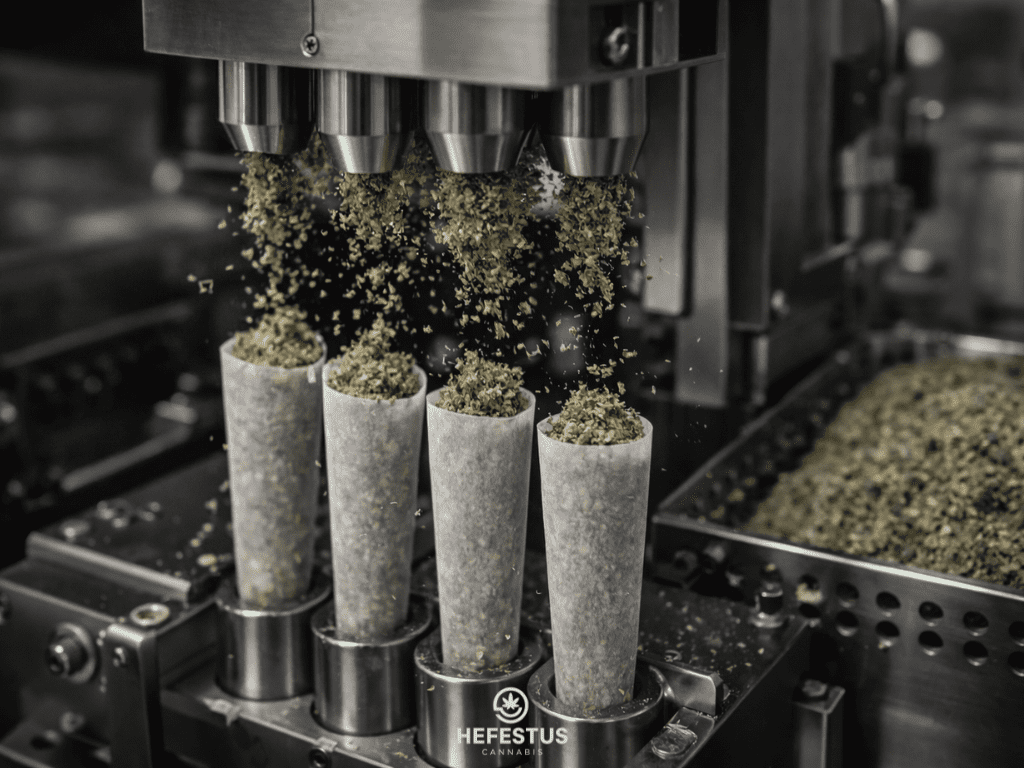
Pre-Roll Production is one of the fastest-growing product categories in the Nevada cannabis market. Pre-rolls — factory-rolled cannabis cigarettes — require precision at scale to meet Nevada’s strict weight, consistency, and labeling requirements. For cannabis businesses looking to scale pre-roll operations, investing in purpose-built manufacturing equipment is increasingly essential to staying competitive.
The Future of Cannabis Laws in Nevada
Consumption Lounge Expansion: The 2021 legalization of consumption lounges is still working through implementation. As more venues come online in Las Vegas and Reno, the market for on-site consumption — particularly among tourists — is expected to grow substantially.
Possession Limit Increases: Senate Bill 277 raised the possession limit to 2.5 ounces effective January 2024. Further legislative adjustments remain a possibility as Nevada monitors neighboring states.
Federal Legalization Impact: If Congress were to reschedule or fully legalize cannabis at the federal level, Nevada’s existing infrastructure — robust licensing, track-and-trace, testing labs — would position it for significant market expansion, including interstate commerce, improved banking access, and elimination of the federal property prohibition.
Expungement: Nevada has enacted legislation providing a pathway to expunge prior marijuana convictions for activities now decriminalized or legalized, recognizing that past enforcement disproportionately impacted certain communities.
Nevada Cannabis Laws FAQ
Is recreational cannabis legal in Nevada?
Yes. Recreational cannabis has been legal in Nevada since January 1, 2017, for adults 21 and older. It may be purchased from licensed dispensaries and consumed on private property. Public consumption remains a misdemeanor.
How much cannabis can you legally possess in Nevada?
Adults 21+ may possess up to 2.5 ounces of cannabis flower and up to ¼ ounce (7 grams) of concentrate. These limits were updated by Senate Bill 277, effective January 1, 2024.
Can you grow cannabis at home in Nevada?
Only if you live more than 25 miles from the nearest licensed dispensary. Qualifying adults may grow up to 6 plants per person, with a maximum of 12 plants per household. Plants must be in a locked, enclosed, non-publicly-visible space.
Where can you legally buy cannabis in Nevada?
Only from licensed cannabis dispensaries. Nevada had 103 active licensed dispensaries as of early 2025. Any purchase from an unlicensed source is illegal.
Conclusion
Nevada cannabis laws continue to evolve, with expanding consumption lounges, rising possession limits, and potential federal legalization on the horizon. The state’s robust regulatory framework — built on licensing, track-and-trace, and strong tax revenue for public education — positions Nevada as a model for legal cannabis markets nationwide.
Whether you’re consuming, cultivating, or operating a business, staying informed on Nevada cannabis laws is the best way to remain compliant and take advantage of everything this mature, well-regulated market has to offer.