Cannabis Industry Statistics
The cannabis industry statistics in 2026 reveal a market that is expanding rapidly – but becoming more complex, competitive, and uneven across regions. What was once a high-growth emerging sector is now entering a more mature phase, shaped by shifting consumer behavior, regulatory uncertainty, and increasing pressure on profitability.
The cannabis market continues to grow globally and within the United States, but estimates vary significantly depending on how the industry is measured. Differences in legal frameworks, reporting standards, and market definitions have created a wide range of projections, making it difficult to define a single “true” market size.
Rather than focusing on one narrative, this report compiles the most relevant cannabis industry statistics across market size, growth rates, consumer behavior, legalization trends, and business performance -giving a clearer, data-driven view of where the industry stands and where it is heading.
Cannabis Industry Statistics: Market Size, Growth & Global Data (2026)
The cannabis market is expanding rapidly, but forecasts vary dramatically depending on assumptions about legalization, regulation, and consumer adoption.
Global Cannabis Market
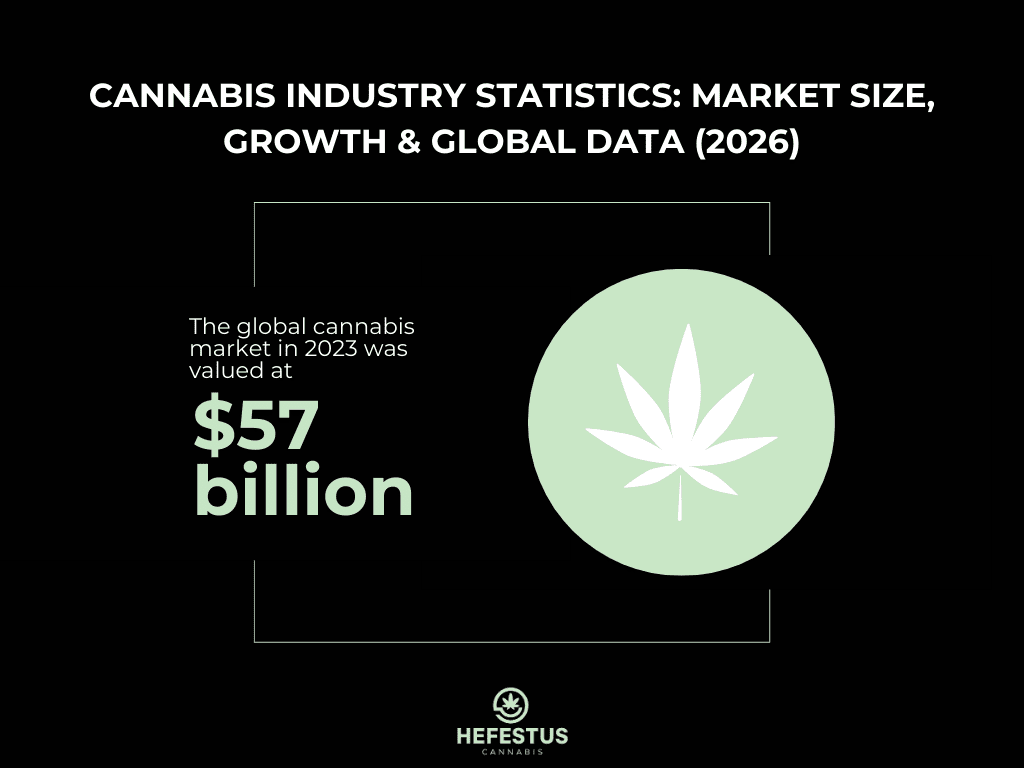
- The global cannabis market was valued at $57 billion in 2023 (Paybotic Financial), establishing a baseline for modern industry expansion.
- The market is projected to reach $102.72 billion this year and grow further to $137.67 billion in 2026 (Fortune Business Insights).
- High-end projections suggest the global market could reach $444 billion by 2030 (Financial News Media)
U.S. Cannabis Market
The U.S. market remains the global leader, but reported size varies depending on what is included.
- Legal U.S. cannabis retail sales reached $38.5 billion in 2024 (Cannabis Business Times), representing one of the most conservative baseline figures.
- The U.S. cannabis market is projected to reach $44.3 billion this year (Grand View Research)
- Long-term forecasts include $76.39 billion by 2030 (Grand View Research) and $60 billion by 2028 (Würk).
- One aggressive projection estimates $428.22 billion by 2032 (Fortune Business Insights), which is a clear statistical outlier compared to other forecasts.
Growth Rates (CAGR & YoY)
Growth remains strong overall, but it is slowing compared to earlier years and varies significantly by segment.
- The U.S. cannabis market is expected to grow at a 11.51% CAGR next 5 years, aligning with other projections of 11–12% annual growth (Grand View Research).
- Legal cannabis sales in the U.S. increased 4.5% year-over-year in 2024 (Cannabis Business Times), indicating continued but slower expansion.
- Industry revenue is forecast to grow 13.1% this year, reaching $34 billion (Cannabis Business Times).
Category-Level Growth
Some categories are expanding much faster than the overall market.
- Pre-rolls are expected to grow at a 10% CAGR through 2029 (Cannabis Science & Tech), making them one of the fastest-growing major categories.
- Smaller categories such as shake/trim/lite are projected to grow at 15.4% CAGR, while sublinguals grow at 11.4% CAGR and topicals at 10.5% CAGR (Cannabis Science & Tech).
- Cannabis beverages are projected to grow at a 6.1% CAGR, adding $370 million in sales by 2029 (Cannabis Science & Tech).
- The global cannabis delivery market is expected to grow from $2.95 billion in 2023 to $18.65 billion by 2033 at a 20% CAGR (Swell).
Cannabis Industry Revenue by Region
The cannabis market is heavily concentrated geographically, with North America dominating global sales.
- North America accounted for 83.82% of the global cannabis market in 2025 (Fortune Business Insights), confirming its dominance in the industry.
- The North American cannabis market was valued at $86.1 billion in 2025 (Fortune Business Insights).
U.S. Market Infrastructure
Retail infrastructure is now widespread across the country.
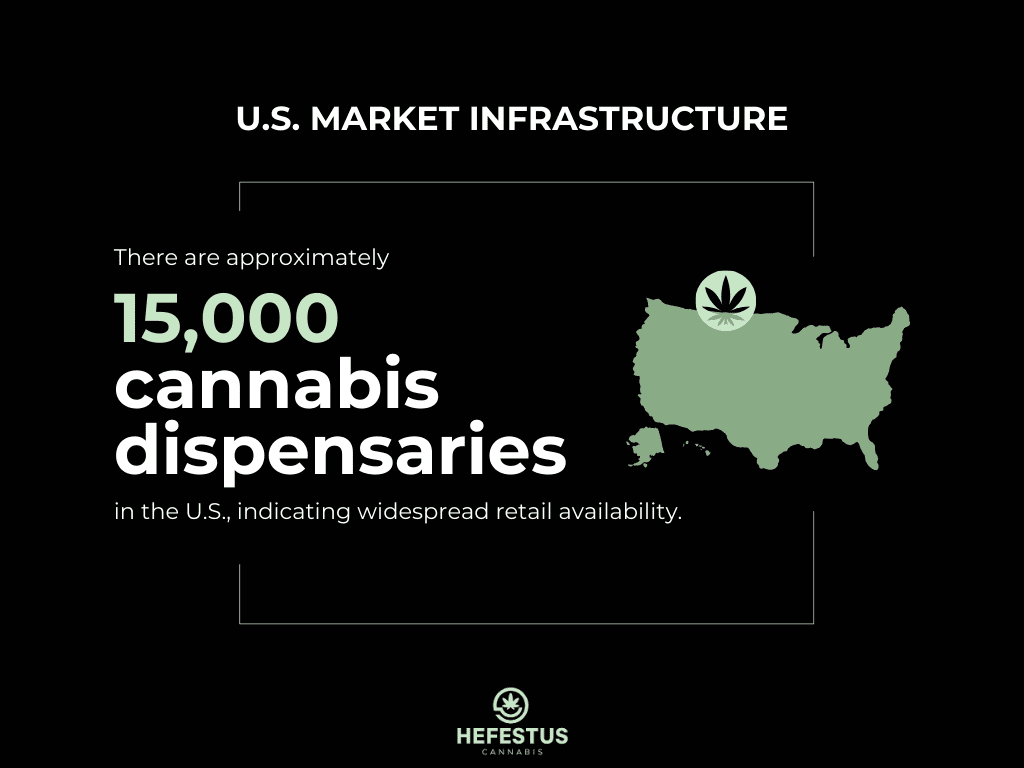
- There are approximately 15,000 cannabis dispensaries in the U.S. (Pew Research), indicating widespread retail availability.
- 79% of Americans live in a county with at least one dispensary, showing near-national accessibility. (Pew Research)
State-Level Trends
Growth is not evenly distributed — newer markets are expanding while mature ones contract.
- New York cannabis employment grew 209%, while Mississippi grew 103% and Ohio grew 34% (Cannabis Business Times).
- Mature markets saw declines, including Arizona at -52%, Illinois at -25%, and Colorado at -9% (Cannabis Business Times).
- New York dispensaries expanded from 41 to over 300 by mid-2025 and are projected to exceed 625 retailers by the end of 2025 (Paybotic Financial).
Cannabis Consumer Statistics
Cannabis consumption is now mainstream, with adoption spreading across age groups and demographics.
Adoption
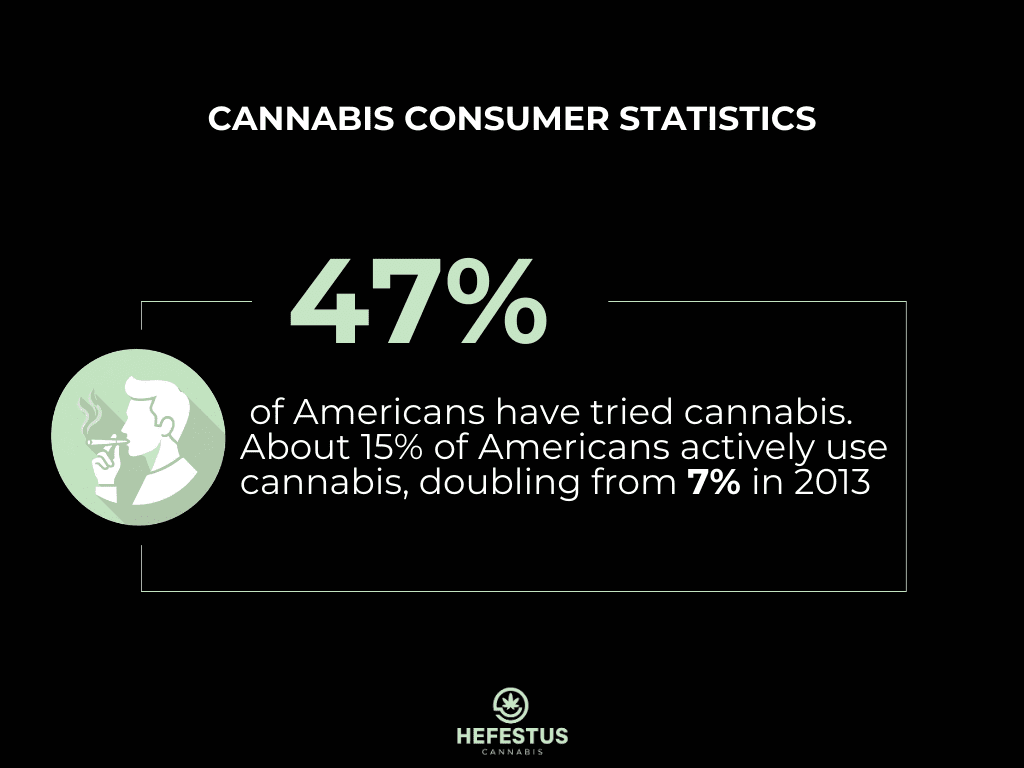
- 47% of Americans have tried cannabis (Gallup), indicating mainstream adoption.
- About 15% of Americans actively use cannabis (Gallup), doubling from 7% in 2013 (Würk).
- 22.3% of Americans aged 12+ used cannabis in the past year, totaling 64.2 million people (SAMHSA).
Consumption Behavior
Consumers are using cannabis more frequently and across multiple formats.
- 42% of cannabis consumers are intensive users, meaning frequent or daily use. (NLM)
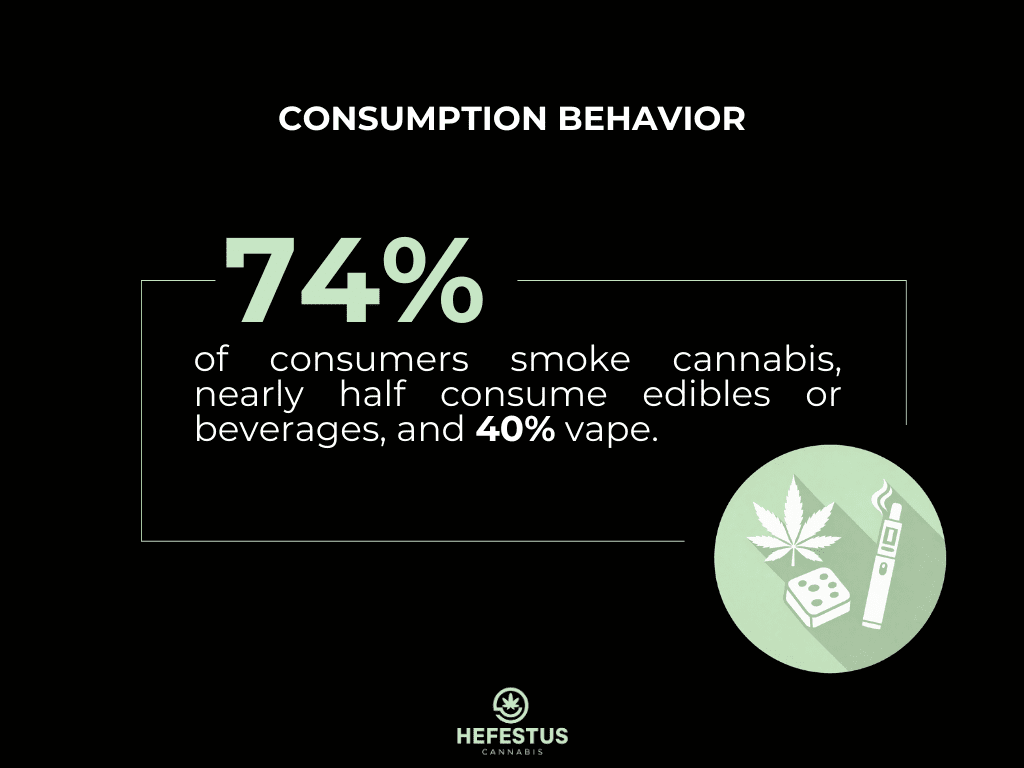
- 74% of consumers smoke cannabis, nearly half consume edibles or beverages, and 40% vape (SAMHSA).
- 21% of all Americans between the ages of 18-64 use THC flower/buds. (Statista)
- 16% prefer edibles
- 15% favor cartridges and vapes
- 13% go for pre-rolls
- 6% like extracts
- 4% choose a topical
- 40% of those surveyed like these products in CBD form
- 52% reported not consuming cannabis products at all
Purchase Behavior
Price and potency dominate buying decisions.
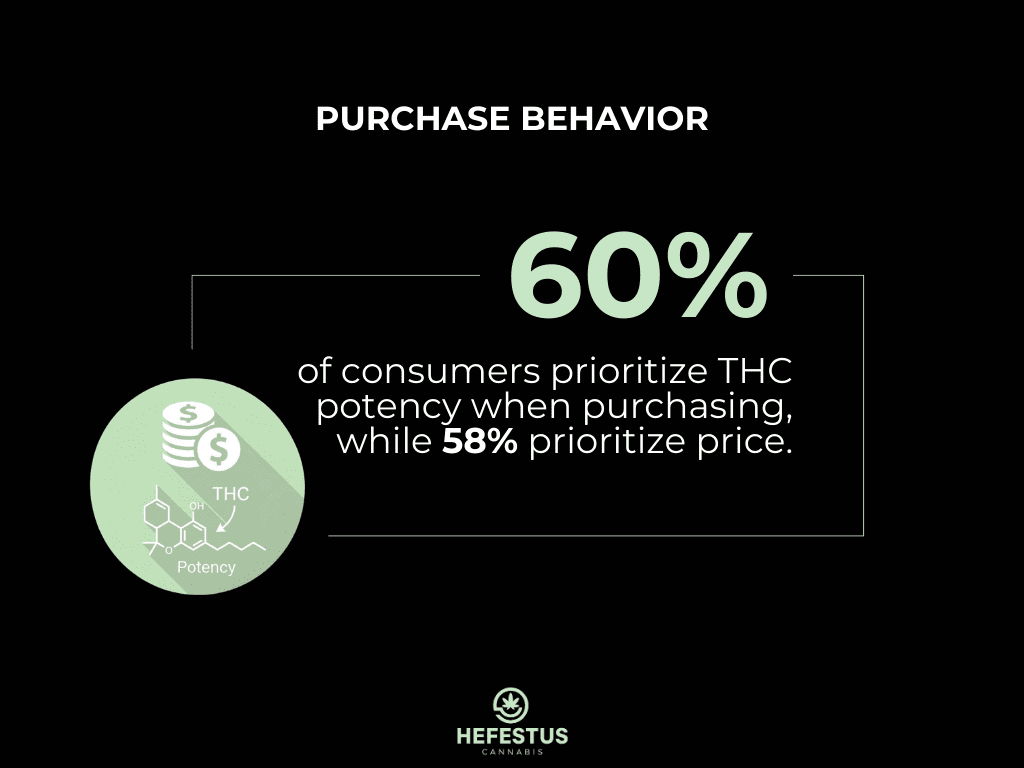
- 60% of consumers prioritize THC potency when purchasing, while 58% prioritize price (RUKLI).
- 39% of consumers reported buying cheaper cannabis in 2022, but 73% increased spending per transaction (RUKLI).
Demographics
New user groups are driving growth.
- Millennials and Gen Z account for over 60% of cannabis purchases (Ganjapreneur).
- More than 1 in 3 women consume cannabis, reflecting major demographic expansion. (Forbes)
- Women also comprise 55% of the user base on Jointly, a consumer-focused cannabis product discovery app with over half a million users. (Reuters)
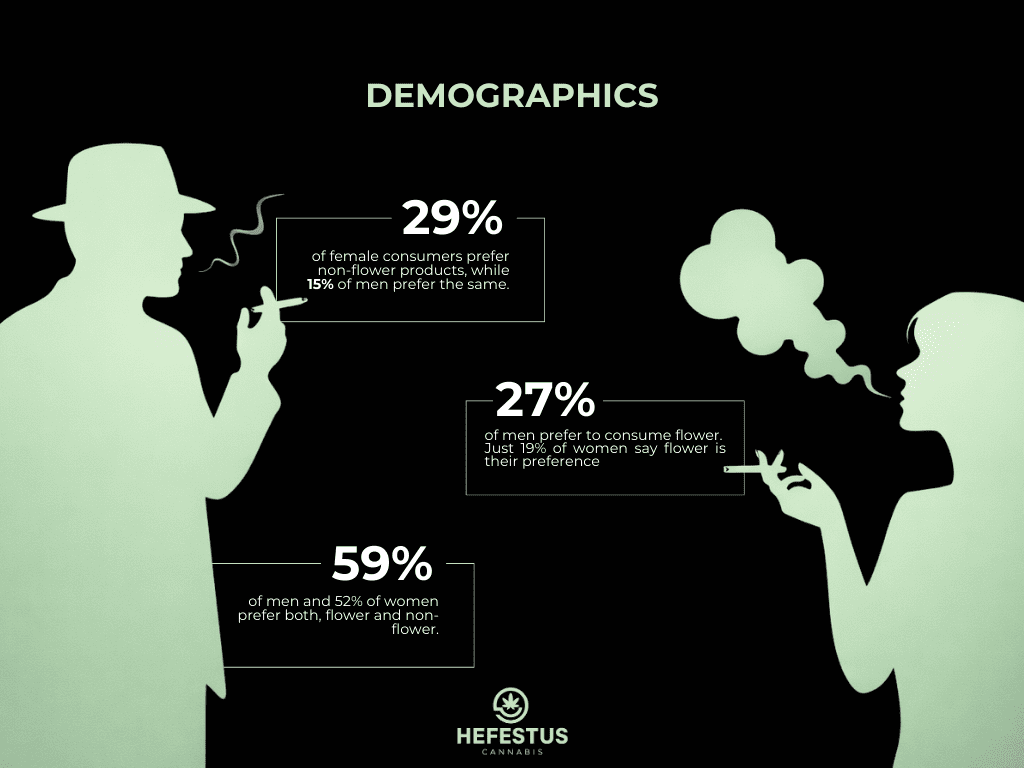
- 29% of female consumers prefer non-flower products, while:
- 15% of men prefer the same.
- 27% of men prefer to consume flower
- Just 19% of women say flower is their preference
- 59% of men and 52% of women prefer flower and non-flower (New Frontier Data)
- 17% of men (vs. 11% of women) say they smoke marijuana. And men are marginally more likely to be “regular consumers.” (Gallup)
- Smoking marijuana is more common among adults without a college degree (17%) than it is among college graduates (11%). (Gallup)
- Cannabis use among adults aged 65+ increased from 11% to 32% between 2009 and 2019 (Public Health Institute).
- 7% of adults aged 65 and over who report using cannabis in May 2025, according to CDUHR at the NYU School of Global Public Health. Overall, use among those 65 and older surged nearly 46% from 2021 to 2023 (News-Medical.net)
- 39% of consumers say they give cannabis to friends and family (New Frontier Data)
Why Consumers Use Cannabis
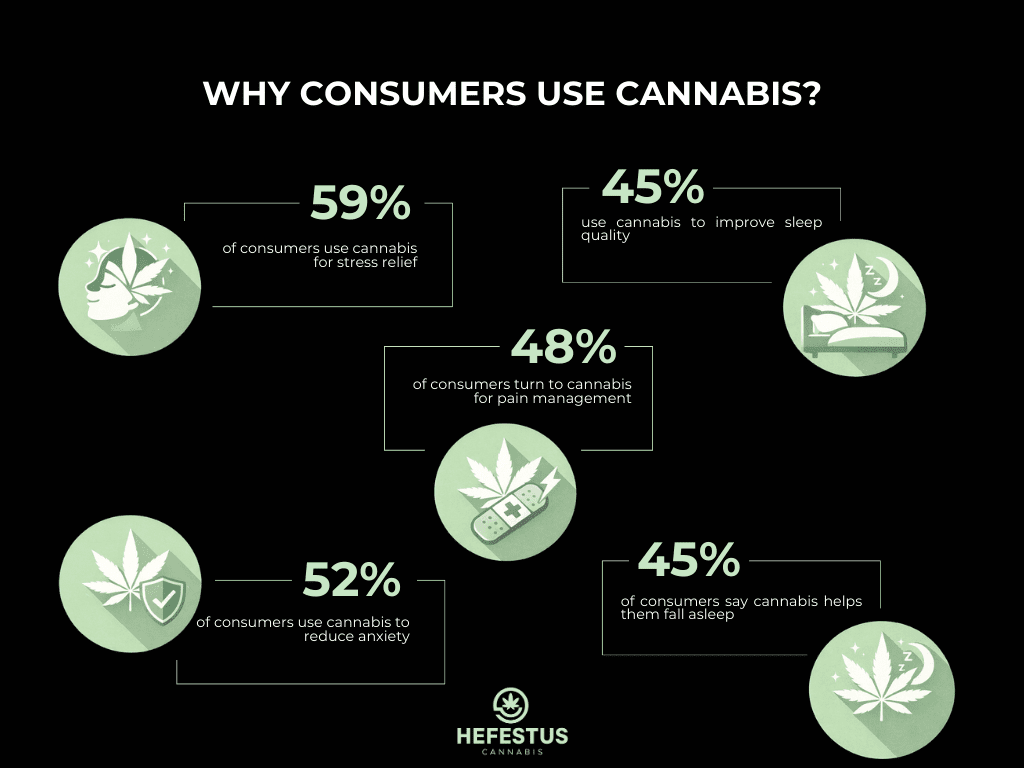
- 59% of consumers use cannabis for stress relief
- 52% use cannabis to reduce anxiety
- 48% of consumers turn to cannabis for pain management
- 45% use cannabis to improve sleep quality
- 45% say cannabis helps them fall asleep (New Frontier Data)
- 14% of cannabis consumers use cannabis for exercise. (New Frontier Data)
- 16% of Americans aged 21 and older say they use cannabis as a sleep aid (Nuggmd)
- Men were more likely than women to say they used cannabis (18% versus 15%, respectively) or CBD products (11% versus 8%) for sleep.
- 20% of people with children in their household generally said they used marijuana for sleep (compared to 14% without children).
Cannabis vs Alcohol
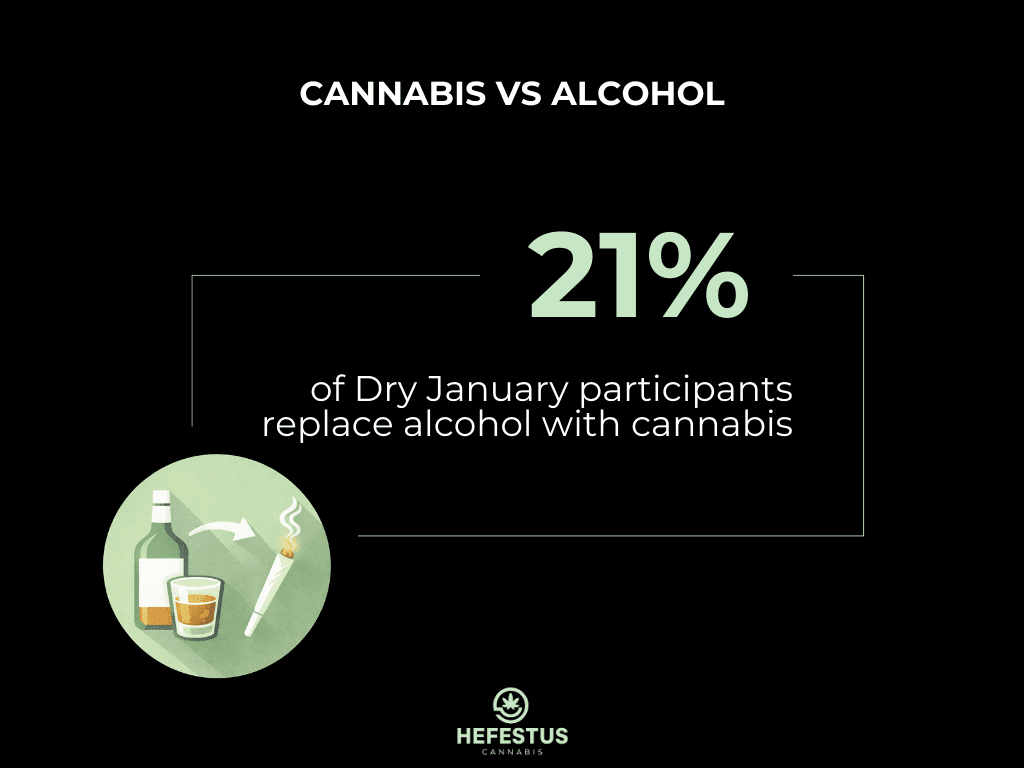
- 21% of Dry January participants replace alcohol with cannabis (Civil Science).
- Nearly 70% of adults aged 18–24 prefer cannabis over alcohol (CBS News).
- 73% say that cannabis is healthier than alcohol (Flowhub)
Legalization & Policy
Legalization has expanded rapidly, but regulatory complexity remains a major constraint.
- Medical use of marijuana is now legal in 42 states plus Washington D.C. for medical purposes: Alabama, Alaska, Arizona, Arkansas, California, Colorado, Connecticut, Delaware, Florida, Hawaii, Illinois, Kansas, Kentucky, Louisiana, Maine, Maryland, Massachusetts, Michigan, Minnesota, Mississippi, Missouri, Montana, Nebraska, Nevada, New Hampshire, New Jersey, New Mexico, New York, North Dakota, Ohio, Oklahoma, Oregon, Pennsylvania, Rhode Island, South Carolina, South Dakota, Utah, Vermont, Virginia, Washington, and West Virginia. (MJBizDaily)
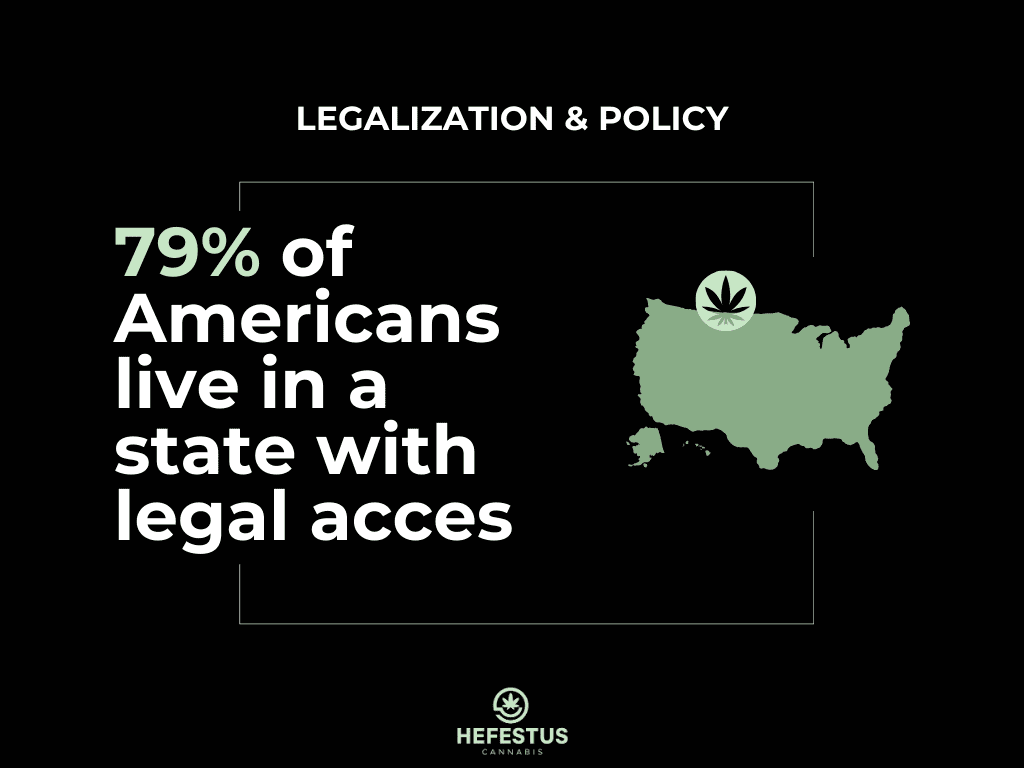
- 79% of Americans live in a state with legal access (Pew Research Center).
- 87% of Americans say marijuana should be legal, though the number has dipped slightly since last year. (Pew Research Center)
- 54% think it should be legal for both medical and recreational use (down from 57%)
- 33% think it should be legal for medical use only (up from 32%)
- 12% don’t think it should be legal (up from 11%)
- About half of Americans (52%) say that legalizing the recreational use of marijuana is good for local economies; just 17% think it is bad, and 29% say it has no impact (Pew Research Center)
- More adults also say legalizing marijuana for recreational use makes the criminal justice system more fair (42%) than less fair (18%); 38% say it has no impact.
Public Opinion
Public opinion strongly favors legalization.
- 70% of Americans supported legalization in 2024 (Pew Research).
- Support remained at 68% from 2021–2023 (Würk).
- Some surveys report 88% approval for legalization (RUKLI), representing a high-end outlier.
Cannabis Tax Revenue Statistics
Cannabis is now a major economic driver, generating significant tax revenue and GDP impact.
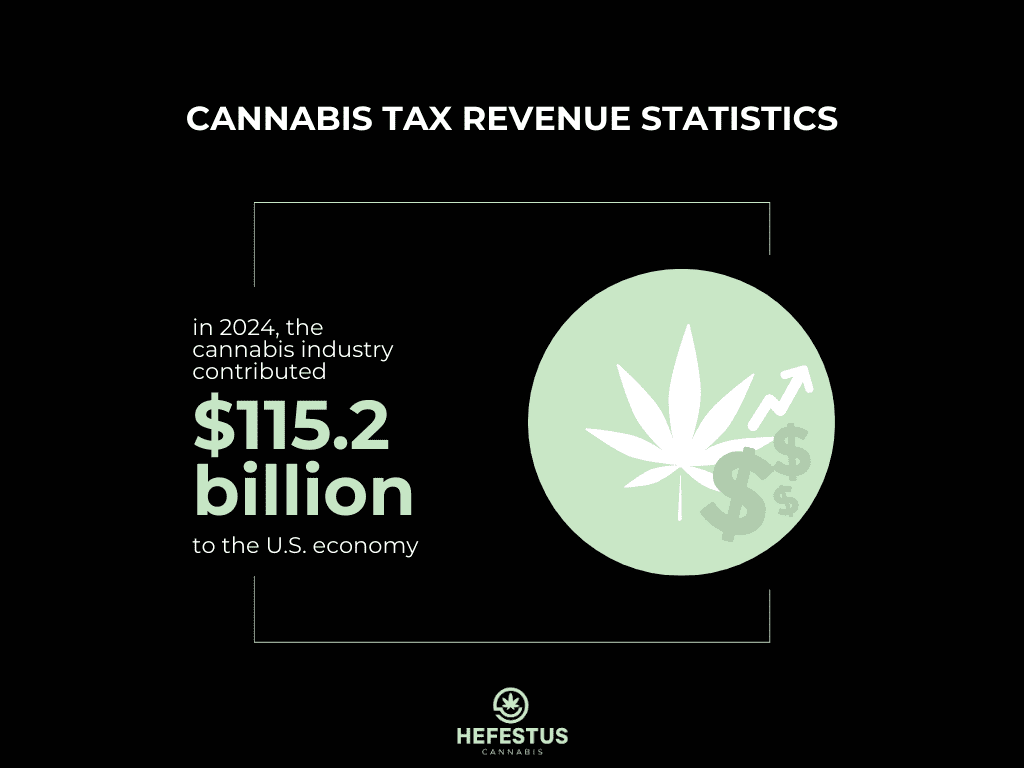
- The cannabis industry contributed $115.2 billion to the U.S. economy in 2024 (Accountably).
- Economic impact is projected to reach $123.6 billion this year (MJBizDaily ).
- Other projections estimate nearly $100 billion in economic contribution (RUKLI).
Tax Revenue
- Cannabis tax revenue exceeds $20 billion annually (Marijuana Policy Project).
- Retail cannabis taxes reached nearly $3 billion in 2022 (RUKLI).
Cannabis Industry Trends
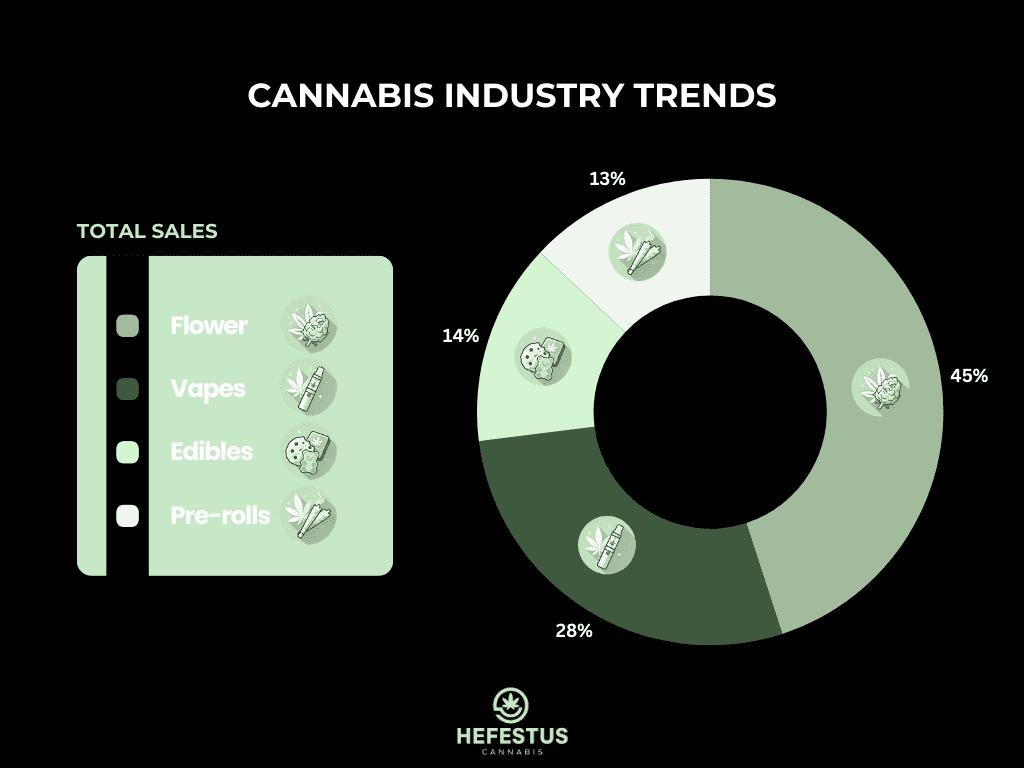
The cannabis market is still dominated by flower, but growth is shifting toward convenience products.
Product Market Share
- Flower accounts for 45% of total sales (Paybotic Financial)
- Vapes represent approximately 28% of the market (Paybotic Financial).
- Edibles account for 27% (Paybotic Financial).
- Pre-rolls represent around 13% of sales (Würk).
Category Revenue
- Flower generated $11.8 billion in sales (Cannabis Science & Tech).
- Vapes generated $7.7 billion (Cannabis Science & Tech).
- Edibles generated $4.3 billion (Cannabis Science & Tech).
- Pre-rolls generated $4 billion (Cannabis Science & Tech).
Fastest Growing Segments
- Pre-roll sales increased 271% from 2020 to 2024 (MJBizDaily).
- Edible sales reached $2.2 billion in 2023 (Würk).
- Cannabis beverages sales increased 79–112% year-over-year in states like Michigan, Illinois, and Ohio (MJBizDaily).
Production, Supply & Pricing
Supply expansion has created downward pressure on pricing across the industry.
- U.S. cannabis consumption reached 48.8 million pounds in 2022 (RUKLI).
- Legal cannabis is expected to surpass illicit supply by 2026 (RUKLI).
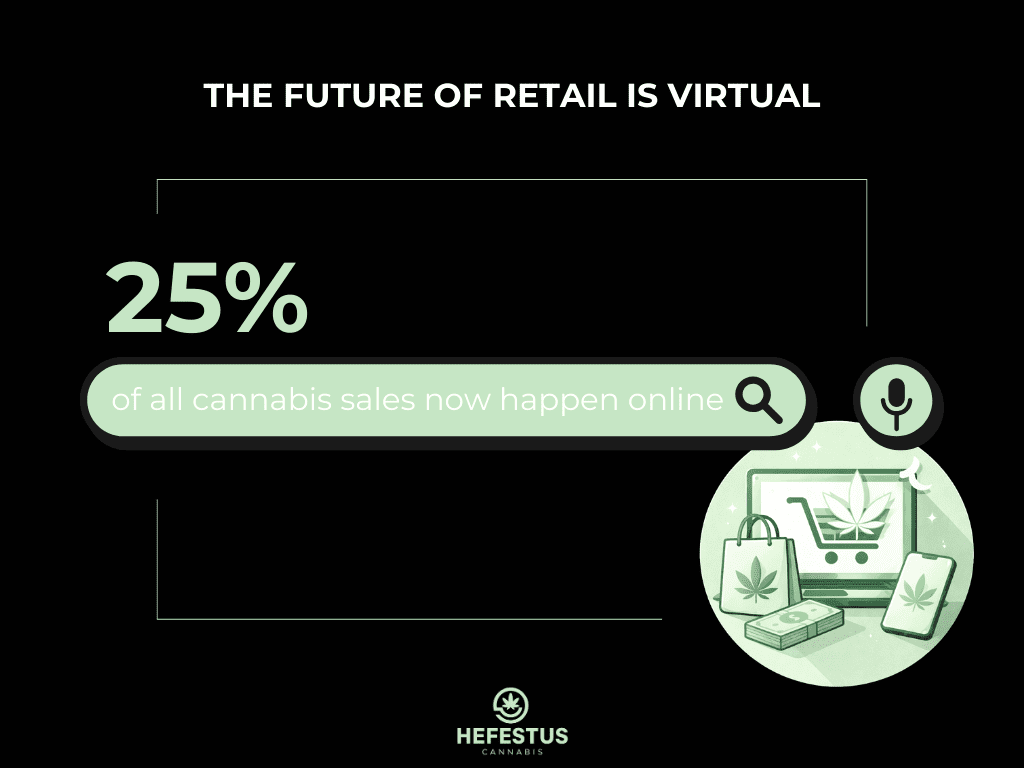
- 25% of all cannabis sales now happen online (Flowhub)
Pricing Trends
- Cannabis prices have fallen 32% since 2021 (Forbes).
- Other estimates show a 20% average price decline (RUKLI).
- In New York, prices dropped:
- Flower: -5%
- Vapes: -15%
- Edibles: -14% (Paybotic Financial)
Cannabis Business Statistics
The industry is facing financial pressure despite continued revenue growth.
- Cannabis companies carry over $2.5 billion in debt (Paybotic Financial).
- Only 27% of companies were profitable in 2024 (Paybotic Financial), down from 42% in 2022 (Paybotic Financial).
- Approximately 32% of cannabis businesses fail to turn a profit (Forbes).
- Delinquent payments exceeded $3 billion in 2024 (MJBizDaily).
Investment Trends
- Venture capital dropped from $3 billion in 2019 to $410 million in 2024 (Paybotic Financial).
Business Landscape
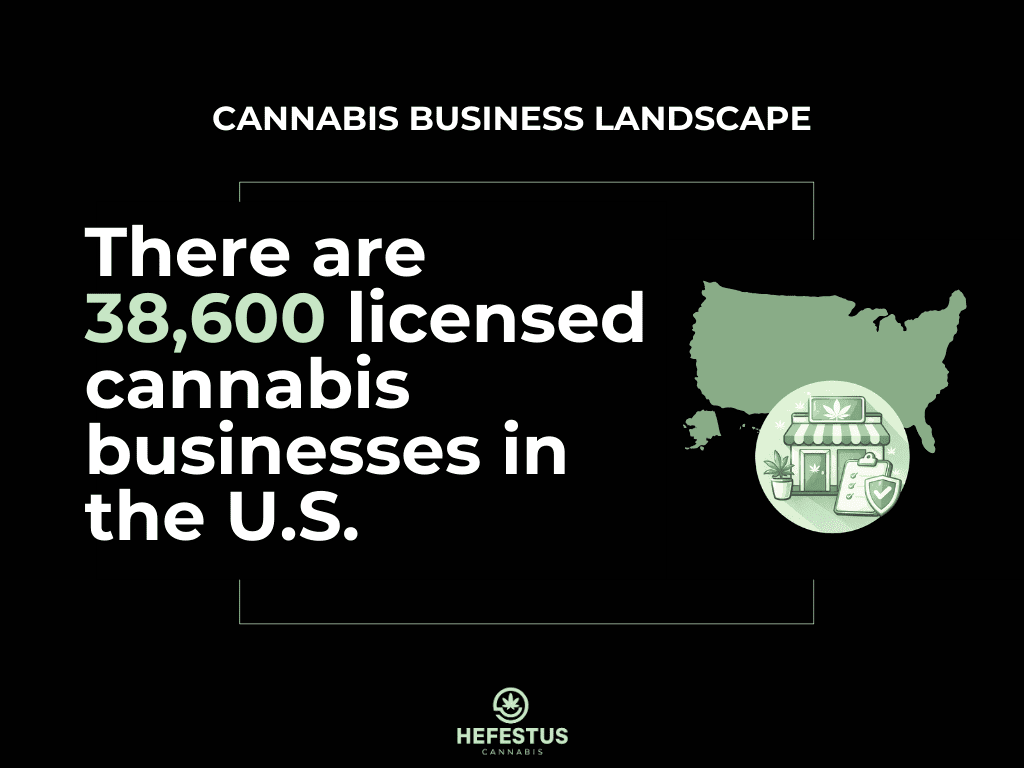
- There are 38,600 licensed cannabis businesses in the U.S. (Würk).
- Licensed businesses declined 1% quarter-over-quarter (MJBizDaily).
- Pending licenses dropped 4% (MJBizDaily).
Marketing channel usage
The most-used marketing channels for cannabis brands are:
- Website: 79.8%
- Sales promotions: 73.7%
- Events: 68.2%
- Advertising: 67.7%
Advertising formats used:
- Internet/digital: 61.7%
- Print: 36.4%
- Billboards: 33.8%
- Radio: 15.7%
- TV/Streaming: 11.6% (Cannabis Media Council)
Cannabis Employment Statistics
Employment growth is inconsistent and reflects a shift toward operational efficiency.
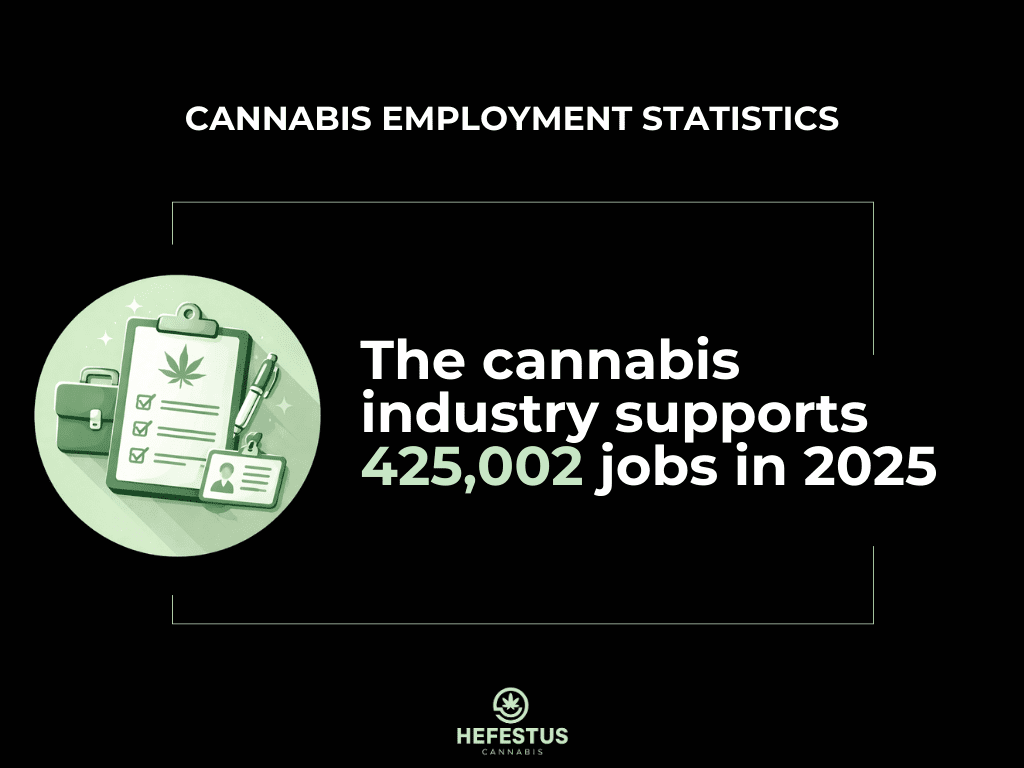
- The cannabis industry supports 425,002 jobs in 2025. (Vangst Jobs Report 2025)
- Employment declined 3.4% year-over-year (Cannabis Business Times).
- This represents a loss of 15,443 jobs (Cannabis Business Times).
Key Insights
- Revenue is growing, but profitability is collapsing, with only 27% of companies profitable.
- Prices are falling sharply, down 20%–32% since 2021, signaling commoditization.
- Investment has declined significantly, with VC funding dropping from $3B to $410M.
- Consumer behavior is shifting toward convenience products like pre-rolls and beverages.
- The industry remains fragmented, with legal, illicit, and hemp markets competing simultaneously.
FAQ
How big is the cannabis industry?
The global market ranges from $102.72 billion in 2025 to projections as high as $444 billion by 2030.
What is the U.S. cannabis market size?
Estimates range from $30.1 billion in 2024 to $45.3 billion in 2025.
What percentage of Americans use cannabis?
Around 15% of Americans actively use cannabis, while 47–52% have tried it.
Is the cannabis industry profitable?
Only 27% of companies reported profitability in 2024.
What are the fastest-growing cannabis products?
Pre-rolls, beverages, and minor cannabinoid products are among the fastest-growing segments.
Conclusion
The Cannabis Industry Statistics for 2026 show an industry that is still growing, but no longer in a straightforward way. While market size continues to expand and global forecasts remain aggressive, the data reveals inconsistencies, regional imbalances, and increasing pressure on operators. Growth is real, but it is becoming more complex and harder to sustain.
Consumer adoption remains strong, with usage expanding across demographics and preferences shifting toward convenience-driven products like pre-rolls, edibles, and beverages. At the same time, purchasing behavior is becoming more price-sensitive, reflecting broader market pressures and increased competition. This shift is reshaping product demand and forcing brands to adapt quickly.
From a business standpoint, the gap between revenue growth and profitability is becoming more apparent. Falling prices, declining investment, and regulatory challenges are pushing the industry into a more disciplined phase. These Cannabis Industry Statistics ultimately point to a market that still offers significant opportunity, but one that now rewards efficiency, strategy, and adaptability over rapid expansion.