Cannabis Packaging Regulations

Cannabis packaging regulations are among the most complex and high-stakes requirements in any regulated industry. Unlike traditional consumer goods, cannabis products must comply with strict rules designed to protect public health, prevent youth exposure, and ensure product transparency.
Across markets—from U.S. states like California to federally regulated systems in Canada—packaging and labeling laws shape how cannabis products are designed, presented, and sold. Regulators such as the California Department of Cannabis Control, Health Canada, and even indirectly the U.S. Food and Drug Administration (FDA) influence how businesses approach compliance.
Here’s the reality most operators learn too late:
A single packaging mistake can delay product launches, trigger recalls, or result in fines ranging from $5,000 to $30,000+ per SKU depending on the jurisdiction.
This guide breaks down cannabis packaging requirements, labeling rules, and the operational decisions that determine whether your product passes inspection—or gets pulled from shelves.
What Are Cannabis Packaging Regulations?
Cannabis packaging regulations are legal frameworks that govern how cannabis products must be packaged, labeled, and presented to consumers. Unlike most consumer goods industries, these regulations are designed not only to ensure product quality but also to actively reduce public health risks and prevent misuse.
At their core, these laws exist to address several critical concerns. They are intended to:
- Protect children from accidental ingestion
- Prevent misleading or unsafe product use
- Ensure transparency around THC and CBD content
- Standardize consumer information across products
- Limit marketing practices that could appeal to minors
These objectives shape every aspect of how cannabis products reach the market, from the physical container to the exact wording and placement of labels.
What makes cannabis packaging regulations uniquely strict is that they do not only control the packaging itself—they also regulate the communication displayed on that packaging. In other words, both the container and the message it carries are subject to legal scrutiny.
In practice, this means cannabis packaging regulations typically govern:
- The structure and design of the packaging
- The content and formatting of labels
- Required warning statements and regulatory symbols
- THC and CBD disclosures
- Branding and marketing limitations
The key insight: This is not just compliance—it directly impacts product design, production speed, and brand positioning.
Core Cannabis Packaging Requirements
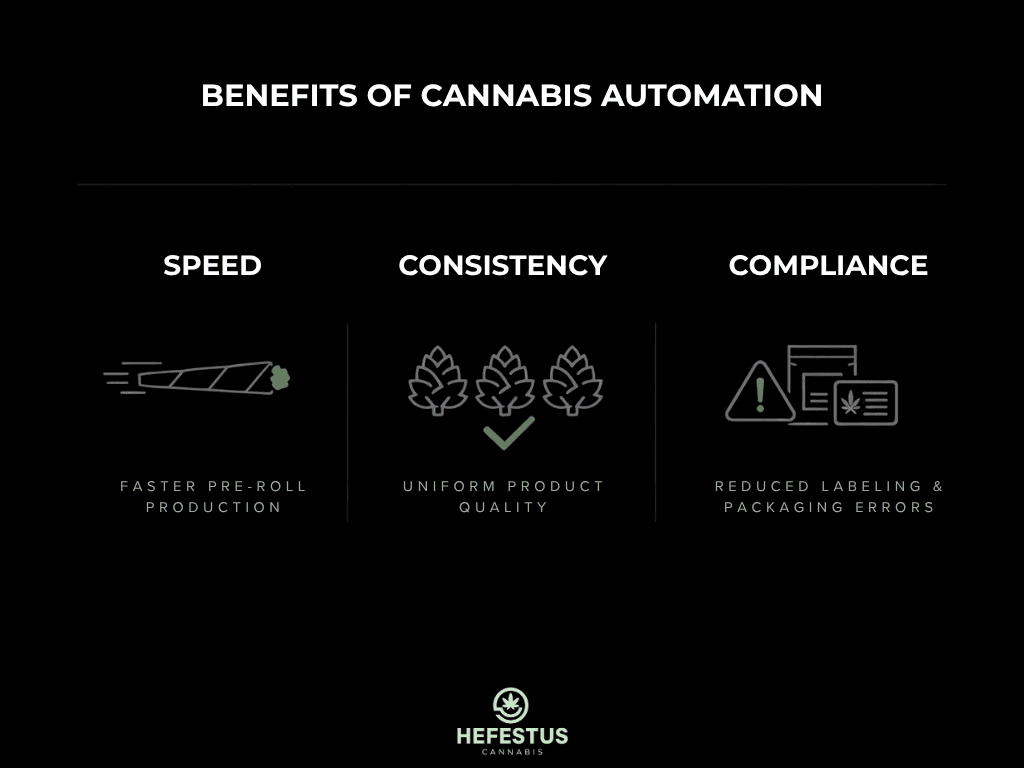
Although cannabis packaging regulations vary by region, most regulated markets follow a consistent set of core requirements designed to protect consumers and ensure product integrity. Understanding these foundational rules is essential, because they influence not only compliance but also packaging design, production processes, and cost structure.
Child-Resistant Packaging
One of the most critical requirements in cannabis packaging is child resistance. Cannabis products must be packaged in containers that are difficult for children under five years old to open, while still remaining accessible to adults.
This requirement is not optional—it applies across nearly all regulated cannabis markets and is often the first element inspectors evaluate during compliance checks.
Common child-resistant mechanisms include:
- Push-and-turn caps commonly used on jars and bottles
- Locking lids designed for repeated use
- Certified child-resistant (CR) tubes for pre-rolls
- Blister packs with pressure-release designs
Most jurisdictions require these packaging solutions to meet recognized testing standards, such as ASTM or CPSC protocols, which evaluate both effectiveness and usability.
Critical reality: Child-resistant packaging is not simply a design feature—it is a certification requirement. Packaging that looks compliant but lacks proper certification will fail inspection. In practice, working with experienced pre-roll packaging companies that supply certified child-resistant solutions can significantly reduce this risk from the outset.
Tamper-Evident Packaging
Tamper-evident packaging is a fundamental requirement in cannabis compliance, designed to clearly indicate whether a product has been opened, altered, or compromised before it reaches the consumer. This requirement plays a critical role in maintaining product integrity and ensuring trust across the supply chain.
In regulated cannabis markets, products must include features that provide visible evidence of tampering. These mechanisms are not optional—they are a standard expectation during inspections and retail distribution.
Common tamper-evident solutions include:
- Shrink bands applied around caps or closures
- Tear strips that must be broken to access the product
- Security seals or adhesive labels that show disruption when opened
- Breakable caps that visibly separate upon first use
These features protect both the end consumer and the broader supply chain by ensuring that products remain sealed and uncontaminated from production through to purchase.
Opaque or Non-Transparent Packaging
Many cannabis regulations require packaging to be opaque or otherwise limit product visibility. This restriction is primarily intended to reduce the visual appeal of cannabis products—especially to minors—and to prevent products from being mistaken for non-cannabis items.
This requirement is particularly strict for product categories that may resemble everyday consumer goods. For example, regulators often enforce opacity rules more aggressively for:
- Edibles, which can resemble candy or snacks
- Infused beverages, which may be mistaken for standard drinks
Beyond compliance, this requirement has a direct impact on packaging design and branding strategy. Companies cannot rely on product visibility to attract consumers, which forces a greater emphasis on labeling, structure, and material choices to communicate quality and differentiation.
Key insight: Opacity requirements don’t just restrict design—they shift how brands compete. When the product can’t be seen, the packaging itself becomes the primary tool for building trust and influencing purchasing decisions.
Resealable Packaging for Multi-Serving Products
Multi-dose cannabis products must remain child-resistant even after the package has been opened. This is a critical requirement in most regulated markets, and one that is frequently misunderstood or overlooked during product development.
Unlike single-use packaging, multi-serving formats must maintain their protective functionality throughout repeated use. In other words, the packaging cannot lose its child-resistant properties after the first opening—something that many low-quality or improperly designed solutions fail to achieve.
Common examples of resealable, compliant packaging include:
- Edible pouches with certified child-resistant zipper systems
- Tincture bottles with push-and-turn or locking dropper caps
- Multi-dose capsule containers designed for repeated secure closure
From a compliance standpoint, this requirement introduces additional complexity. It is not enough for packaging to be child-resistant at the point of sale—it must continue to meet regulatory standards across the product’s entire lifecycle.
Critical reality: Failure to maintain child resistance after opening is one of the most common compliance issues in cannabis packaging. In many cases, this leads to failed inspections, product recalls, or forced packaging redesigns—often after products have already entered distribution.
Cannabis Labeling Requirements
Labeling is where most cannabis compliance failures occur—not packaging. While packaging must meet structural and safety standards, it is the label that regulators scrutinize most closely during inspections.
Cannabis labeling requirements exist to ensure that consumers fully understand what they are purchasing and consuming. This includes accurate information about potency, ingredients, usage, and potential risks. Even minor labeling errors—such as incorrect THC values or missing warnings—can result in failed inspections, product recalls, or enforcement actions.
Required Label Elements
Although specific requirements vary by jurisdiction, most regulated cannabis markets mandate a consistent set of core labeling elements. These are designed to provide transparency, traceability, and consumer safety across all product categories.
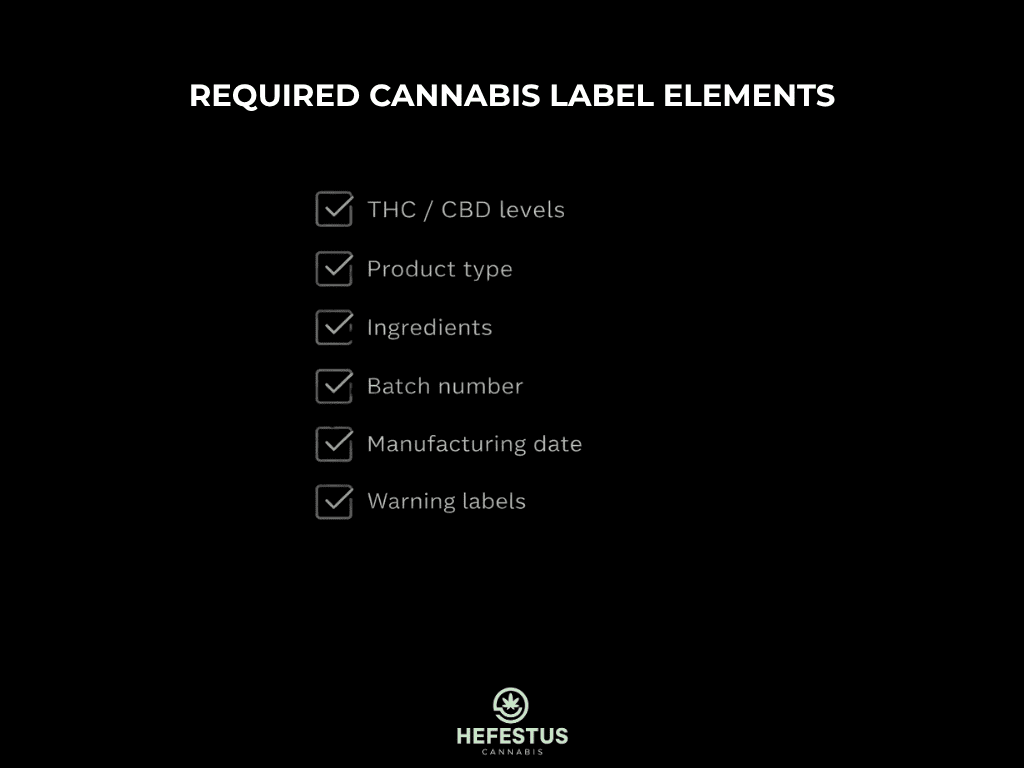
In most cases, cannabis product labels must include:
- Clear disclosure of THC and CBD levels, often expressed both per package and per serving
- Identification of the product type, such as flower, edible, or concentrate
- A complete ingredient list, particularly for ingestible products like edibles and beverages
- A batch or lot number to support traceability and recall procedures
- Manufacturing and packaging dates to indicate product freshness and compliance timelines
- Storage instructions to maintain product stability and safety
- Manufacturer or distributor information, including contact details or license identifiers
For complex product formats, production compliance for infused products introduces additional labeling variables—including ingredient disclosures and potency declarations—that require extra attention. This means compliance is not just about including the right information—it’s also about presenting it correctly.
Key insight: Labeling is not a secondary consideration—it is the primary compliance risk in cannabis packaging. Most violations occur not because the packaging fails structurally, but because the label fails to meet regulatory standards in content, accuracy, or layout.
Universal Cannabis Symbol
In many regulated cannabis markets, the use of a standardized cannabis symbol is mandatory. This symbol serves as a clear visual indicator that a product contains THC and must be easily recognizable to consumers at a glance.
Regulators impose strict rules around how this symbol is displayed. It is not simply a branding element—it is a compliance requirement with precise specifications.
In most jurisdictions, the universal cannabis symbol:
- Must be clearly visible on the primary display panel
- Must meet exact size and placement requirements defined by regulation
- Cannot be altered, stylized, or obscured in any way
Because these requirements are highly specific, even minor deviations—such as incorrect sizing, poor placement, or partial obstruction—can result in compliance violations.
Key insight: The cannabis symbol is one of the most frequently checked elements during inspections. Missing, misplacing, or modifying it is a common—and entirely avoidable—reason products fail compliance reviews.
Inaccurate labeling is one of the leading causes of recalls and enforcement actions.
Mandatory Health Warning Labels
Health warning labels are a mandatory component of cannabis packaging and play a central role in regulatory compliance. These warnings are designed to inform consumers about potential risks associated with cannabis use and to promote responsible consumption.
In most jurisdictions, cannabis products must include clearly visible warning statements that address safety, impairment, and health considerations. These warnings are not flexible—they must follow strict regulatory guidelines regarding wording, size, placement, and visibility.
Common required warning statements include:
- “Keep out of reach of children” to reduce the risk of accidental ingestion
- Impairment warnings related to activities such as driving or operating machinery
- Delayed onset warnings, particularly for edible products where effects may take longer to be felt
- Mental health warnings for high-THC products in certain jurisdictions, highlighting potential risks such as anxiety or psychosis
Beyond content, regulators often specify how these warnings must appear on the packaging. This can include minimum font sizes, contrast requirements, and exact phrasing that cannot be modified.
In some markets, cannabis companies are also required to rotate warning statements periodically or include multiple warnings across different product batches. This adds another layer of operational complexity, particularly for brands managing large product catalogs or operating across multiple states.
Compliance risk: Incorrect, incomplete, or improperly formatted warning labels are a frequent cause of compliance violations. Even when the correct message is included, failing to meet formatting or placement requirements can result in failed inspections, product holds, or forced relabeling.
Key insight: Health warnings are not just a legal obligation—they are one of the most tightly controlled elements of cannabis packaging. Treating them as an afterthought is one of the fastest ways to create compliance risk at scale.
Restrictions on Cannabis Branding and Packaging Design
Cannabis packaging is not just regulated for safety—it is also tightly controlled in how it can look, communicate, and differentiate. Unlike traditional consumer products, cannabis brands operate under strict limitations that restrict many common marketing and design strategies.
These restrictions are primarily designed to prevent products from appealing to minors, reduce the risk of accidental consumption, and ensure that packaging does not mislead consumers.
Common Prohibited Elements
Most cannabis regulations explicitly prohibit visual and branding elements that could attract younger audiences or resemble non-cannabis products. As a result, packaging designs must avoid:
- Cartoon characters or illustrated mascots
- Candy-like branding or designs that mimic sweets and snacks
- Bright or neon color schemes in certain jurisdictions
- Celebrity endorsements or recognizable public figures
- Youth-oriented imagery or themes
These limitations significantly reduce the range of traditional branding tools available to cannabis companies, particularly those coming from consumer packaged goods (CPG) backgrounds.
Additional Restrictions
Beyond visual design, cannabis packaging regulations also restrict how brands communicate product benefits and usage. In most regulated markets, packaging must not include:
- Misleading or unverified health claims
- Messaging that encourages overconsumption
- Designs or branding that imitate existing food or beverage products
These rules are enforced to ensure that consumers are not misled and that cannabis products are clearly distinguished from everyday consumer goods.
Key insight: These restrictions create a fundamental tension in cannabis packaging. Brands are expected to differentiate and build recognition—while operating without many of the tools typically used in competitive markets.
As a result, the competitive advantage shifts away from traditional branding and toward other factors. Structural design, material selection, finishing techniques, and labeling strategy become the primary ways brands communicate quality, build trust, and stand out on the shelf.
In this environment, packaging is no longer just a container—it becomes a controlled communication system shaped by regulation.

Examples of Cannabis Packaging Regulations by Region
Cannabis packaging regulations vary significantly depending on the jurisdiction, and understanding these differences is critical for brands operating across multiple markets. While the core principles remain consistent—child safety, transparency, and responsible marketing—the way these rules are enforced can differ dramatically.
California
In California, cannabis packaging is regulated by the Department of Cannabis Control, one of the most established regulatory bodies in the industry. The state enforces a comprehensive framework that prioritizes consumer safety and strict compliance.
Cannabis products sold in California must meet several key requirements. These include the use of certified child-resistant packaging, tamper-evident features that clearly indicate whether a product has been opened, and standardized THC symbols that must be displayed prominently on the packaging.
In addition, California imposes detailed labeling requirements that govern not only what information must be included, but also how it is presented. Packaging designs are also tightly controlled, with strict prohibitions on any elements that could be considered appealing to children.
The result is a regulatory environment where even small compliance errors—particularly in labeling or symbol placement—can lead to inspection failures or enforcement actions.
Canada
Canada operates under a federally regulated system overseen by Health Canada, which enforces some of the strictest cannabis packaging laws globally. Unlike the fragmented state-by-state system in the United States, Canada applies a consistent regulatory framework nationwide.
Cannabis packaging in Canada is subject to strict plain packaging requirements. These rules significantly limit branding and visual differentiation in order to reduce the appeal of cannabis products, particularly to younger audiences.
Under these regulations, packaging must follow standardized formats that include restricted use of colors, controlled typography, and prominent health warnings. Branding elements are heavily limited, and the overall design must remain subdued and compliant with federal guidelines.
Result: Most cannabis products in Canada resemble pharmaceutical packaging, with minimal visual differentiation between brands.
While these restrictions create challenges for brand identity, they also highlight an important shift in the industry. In highly regulated environments, differentiation moves away from traditional branding and toward product quality, packaging structure, and consumer trust.
U.S. State-Level Regulations
In the United States, cannabis packaging regulations are not standardized at the federal level. Instead, each state develops its own regulatory framework, creating a fragmented and often complex compliance landscape for cannabis businesses.
This lack of uniformity means that packaging requirements can vary significantly from one state to another, even when the core principles—such as child safety and labeling transparency—remain consistent.
For example, different states impose distinct rules that directly affect packaging design and branding:
- Massachusetts requires cannabis packaging to follow a “plain design” approach, limiting visual elements that could attract attention or appeal to minors
- New Jersey prohibits packaging that mimics popular food or beverage brands, reducing the risk of confusion or accidental consumption
- Connecticut restricts the use of colors and introduces additional warning requirements, particularly for higher-potency products
These variations create operational challenges for companies operating across multiple states, as packaging that is fully compliant in one market may violate regulations in another.
Key takeaway: In the U.S., compliance is not a one-time achievement—it is a moving target. Multi-state operators must design packaging systems that can adapt to different regulatory environments without requiring constant redesign.
Common Cannabis Packaging Compliance Challenges
This is where most cannabis businesses fail—not because they ignore regulations, but because they underestimate the complexity of implementing them consistently at scale.
Frequent Mistakes
Many compliance issues stem from small but critical oversights that occur during packaging design, labeling, or production. The most common mistakes include:
- Incorrect or inconsistent THC labeling that does not match laboratory results
- Missing or improperly formatted warning statements
- Insufficient label space to accommodate all required information
- Use of non-certified child-resistant packaging
- Inconsistent label placement across production batches
Individually, these errors may seem minor. In practice, they are some of the most common reasons products fail inspections or are flagged by regulators.
Real Consequences
The consequences of non-compliance in cannabis packaging are immediate and often costly. Unlike other industries where minor errors may be tolerated, cannabis regulations are enforced with strict oversight.
Common outcomes of compliance failures include:
- Product recalls that remove inventory from shelves
- Failed inspections that delay product approvals
- Launch delays ranging from two to six weeks or more
- Financial penalties, often ranging from $5,000 to $30,000 or higher depending on the violation
- License suspension or revocation in severe or repeated cases
Key insight: Most compliance failures are preventable. They are not the result of complex legal misunderstandings, but of poor planning, lack of standardization, or breakdowns in execution during packaging and labeling processes.
Why Automated Labeling and Packaging Matter for Compliance
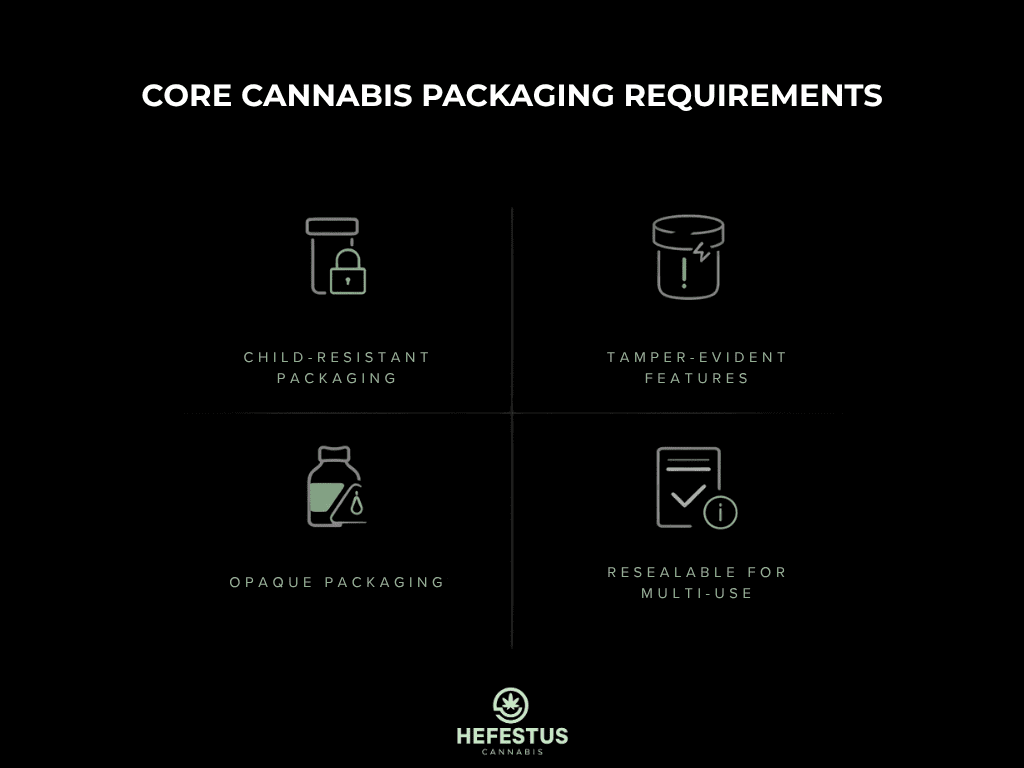
As cannabis businesses scale, manual packaging and labeling processes quickly become a liability. What works for small-batch production often breaks down under higher volumes, where consistency and precision are critical for maintaining compliance.
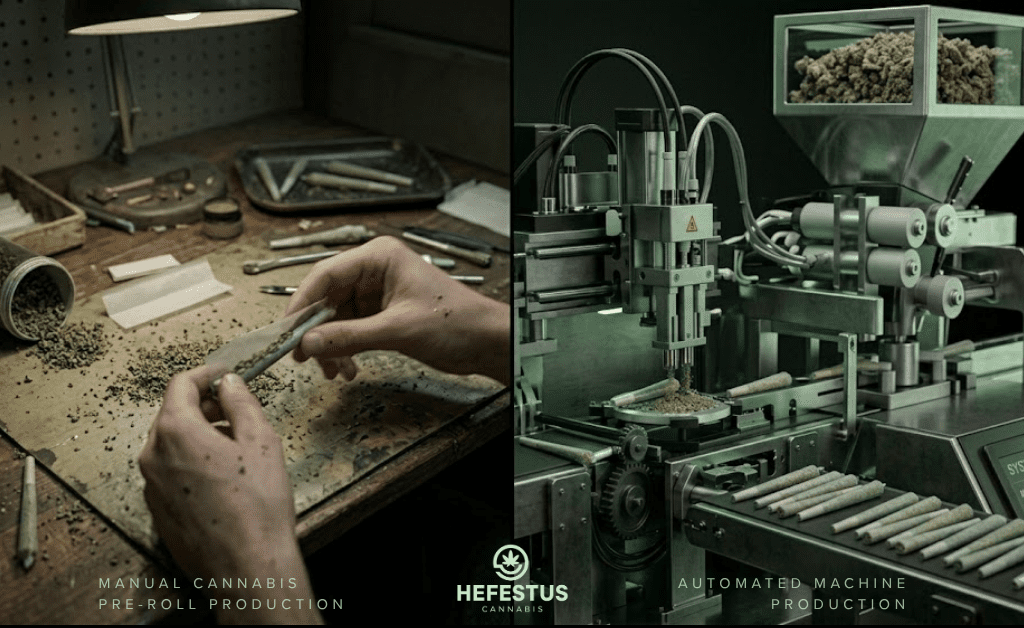
Manual processes introduce variability at every stage of production. Even with trained staff, repetitive tasks such as label application are prone to small errors that compound over time. In a regulated industry like cannabis, those small inconsistencies can lead directly to compliance violations.
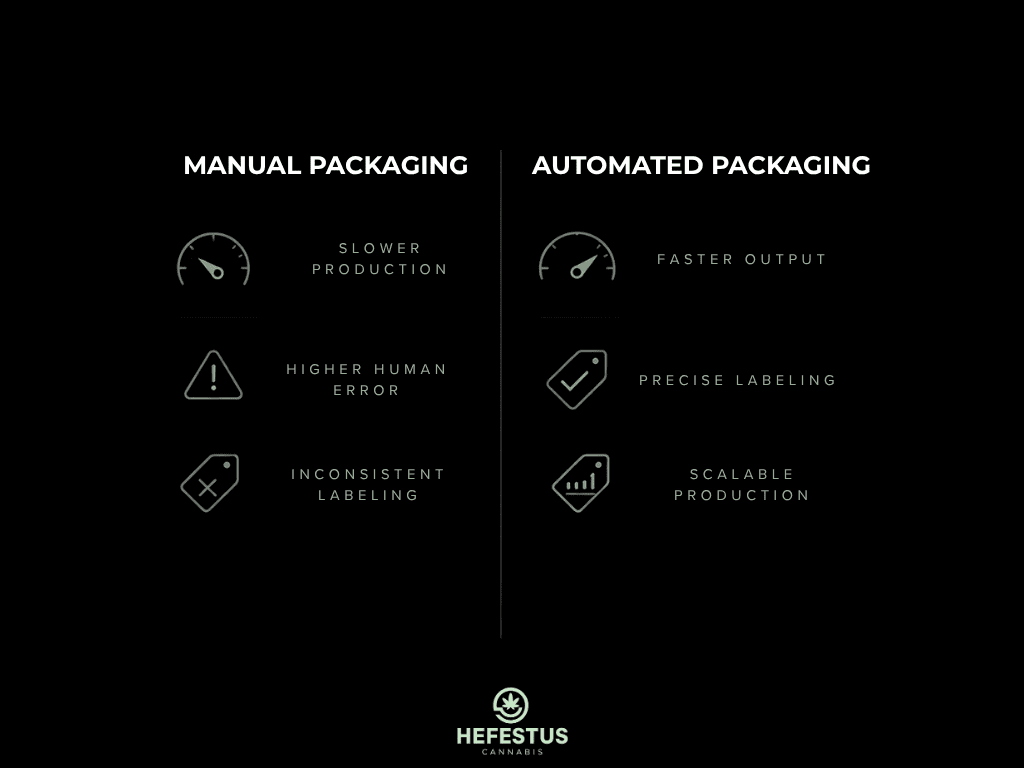
Common issues associated with manual packaging include:
- Misaligned labels that fail to meet placement requirements
- Inconsistent positioning of warning statements and regulatory symbols
- Slower production speeds that limit scalability
- Increased human error, particularly across large production runs
Individually, these issues may seem manageable. At scale, they create systemic risk—especially when products are subject to strict inspection standards.
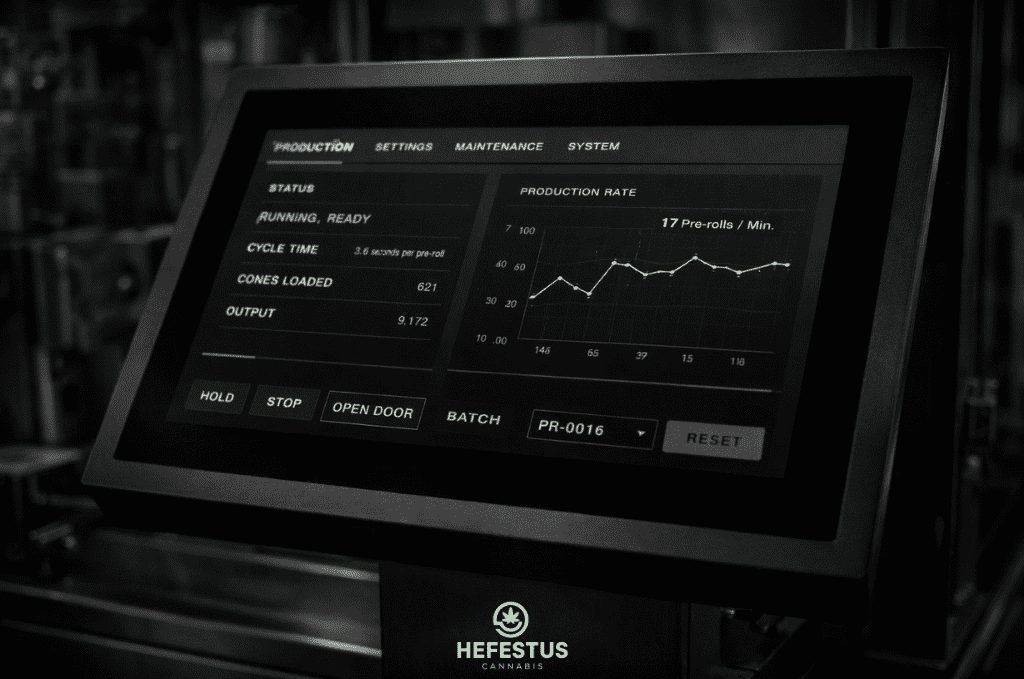
Automated packaging and labeling systems address these challenges by introducing precision, repeatability, and control into the production process—and automated pre-roll production systems have become central to how compliant operations manage this at scale. Rather than relying on manual consistency, automation standardizes execution across every unit produced.
Automated systems improve compliance by:
- Ensuring consistent label placement that meets regulatory specifications
- Standardizing formatting and alignment across all product batches
- Increasing production throughput without sacrificing accuracy
- Reducing costly mistakes that lead to rework, delays, or recalls
Key insight: Automation is not just about efficiency—it is a compliance strategy. As regulatory requirements become more complex and production volumes increase, the ability to maintain consistent, repeatable packaging processes becomes a critical competitive advantage.
How to Choose the Right Cannabis Packaging (Decision Framework)
This is where most cannabis packaging guides fall short. They explain the rules—but they don’t help you make decisions under real constraints like cost, compliance risk, and production scale.
Choosing the right cannabis packaging is not about finding a single “best” option. It’s about balancing regulatory requirements, operational realities, and brand positioning—without creating future bottlenecks.
Step-by-Step Decision Process
A structured approach helps reduce costly mistakes and ensures your packaging decisions hold up as your business grows.
1. Identify Product Type
Start by clearly defining the product category, as each type comes with its own regulatory and operational requirements. Flower, pre-rolls, edibles, vapes, and concentrates all have different packaging constraints, particularly when it comes to labeling space, child-resistance, and storage conditions.
2. Determine Regulatory Requirements
Next, identify the specific regulations that apply to your target market. This includes state or country-level rules, child-resistant (CR) requirements, labeling standards, and warning specifications. If you plan to expand into multiple markets, you need to account for the most restrictive requirements upfront to avoid future redesigns.
3. Calculate Label Space
One of the most overlooked steps is ensuring that your packaging has enough surface area to accommodate all required labeling elements. This includes THC disclosures, warning statements, symbols, and product information. Many brands choose packaging based on aesthetics—only to realize later that it cannot physically support compliant labeling.
4. Select Packaging Format
Once regulatory and labeling constraints are clear, you can choose a packaging format that aligns with your business goals. This decision should balance cost, compliance, durability, and brand positioning. For example, mylar bags may be ideal for high-volume products, while glass containers may better support premium positioning.
5. Evaluate Production Scale
Finally, consider how your packaging will perform at scale. Manual packaging may work for small batches, but it introduces risk as production increases. Automated solutions provide consistency, reduce errors, and support long-term growth without compromising compliance.
Packaging Trade-Off Comparison
| Packaging Type | Cost | Compliance Ease | Brand Perception | Best Use |
| Mylar Bags | Low | High | Medium | High-volume flower |
| Glass Jars | High | Medium | Premium | Boutique brands |
| Tubes | Medium | Low | Standard | Pre-rolls |
| Metal Tins | High | High | Premium | Limited editions |
There is no “best” option—only trade-offs.
Future Trends in Cannabis Packaging Regulations
Cannabis packaging regulations are evolving rapidly.
Key trends:
- Stronger sustainability requirements
- Increased labeling transparency
- More detailed warning systems
- Greater product traceability
- Potential federal standardization (U.S.)
Companies that build flexible packaging systems will adapt faster.

Final Thoughts on Cannabis Packaging Regulations
Cannabis packaging regulations are not just legal requirements—they directly shape how your business operates. From product design to production and expansion, compliance decisions impact cost, efficiency, and scalability.
To stay competitive, brands need a clear understanding of packaging and labeling rules, especially when operating across multiple markets. Most compliance failures don’t come from complex regulations, but from poor planning, inconsistent execution, or choosing the wrong packaging early on.
Scalable systems and standardized processes reduce these risks and make it easier to maintain compliance as production grows.
Ultimately, the difference between compliant and non-compliant operations comes down to decisions made early.